Leaderboard



Popular Content
Showing content with the highest reputation since 15/02/24 in all areas
-
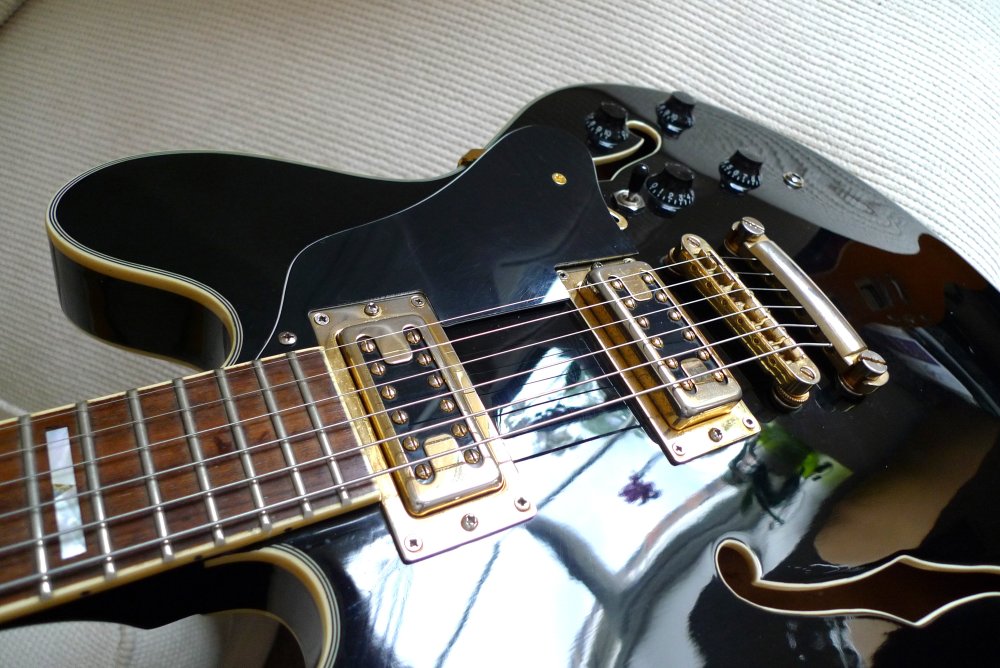
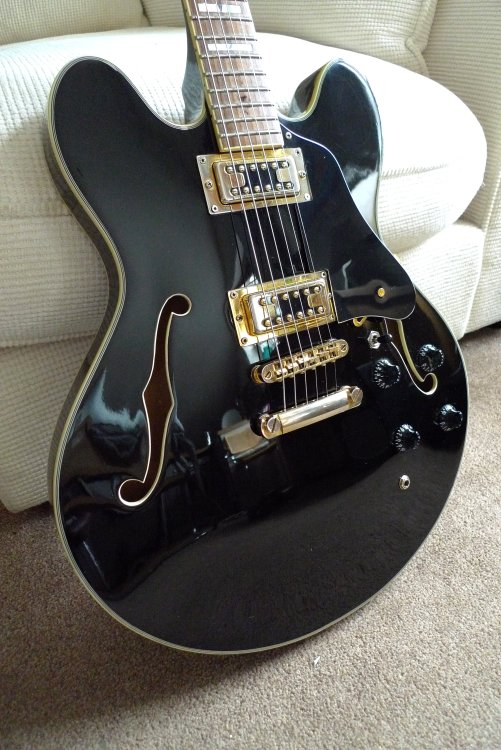
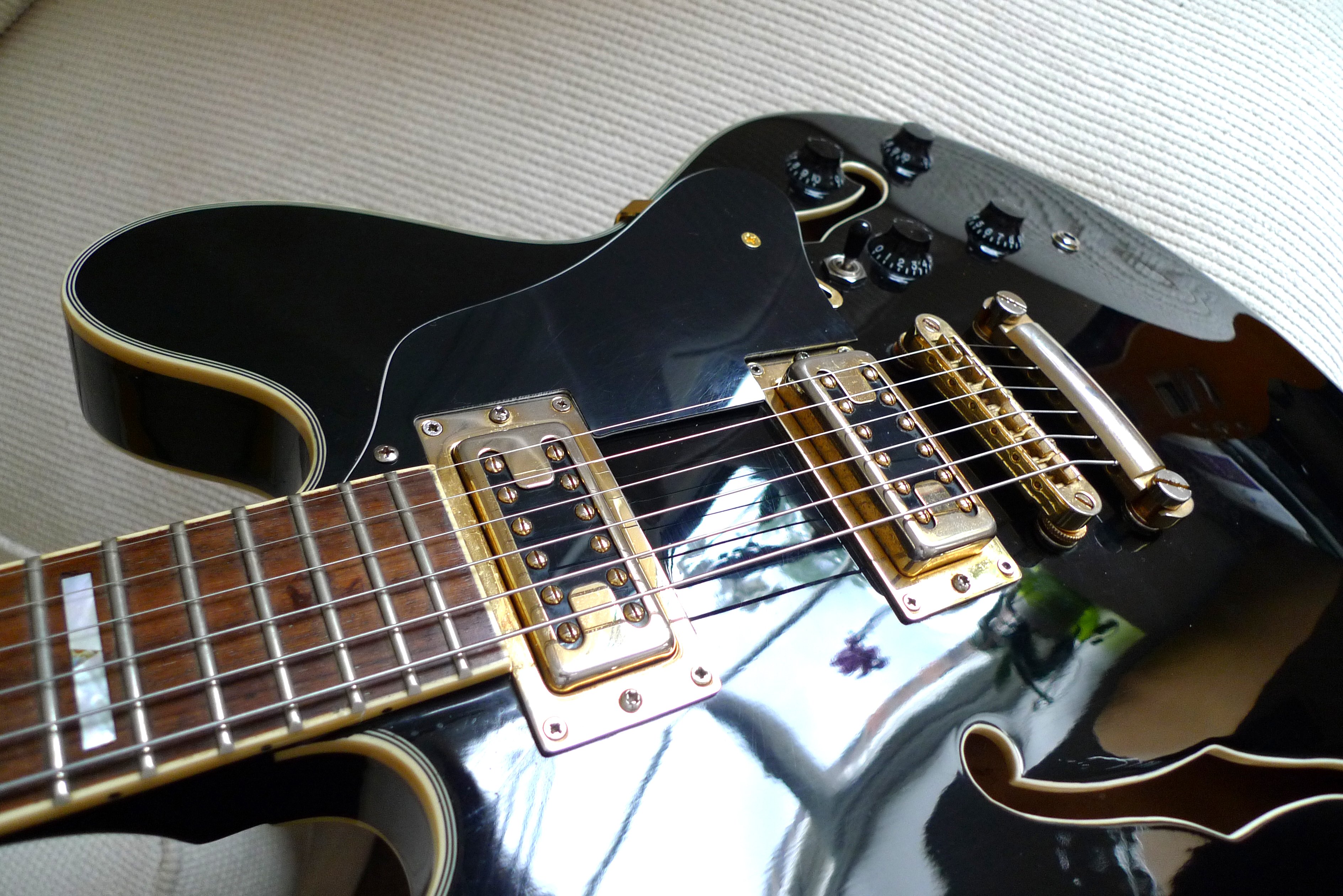
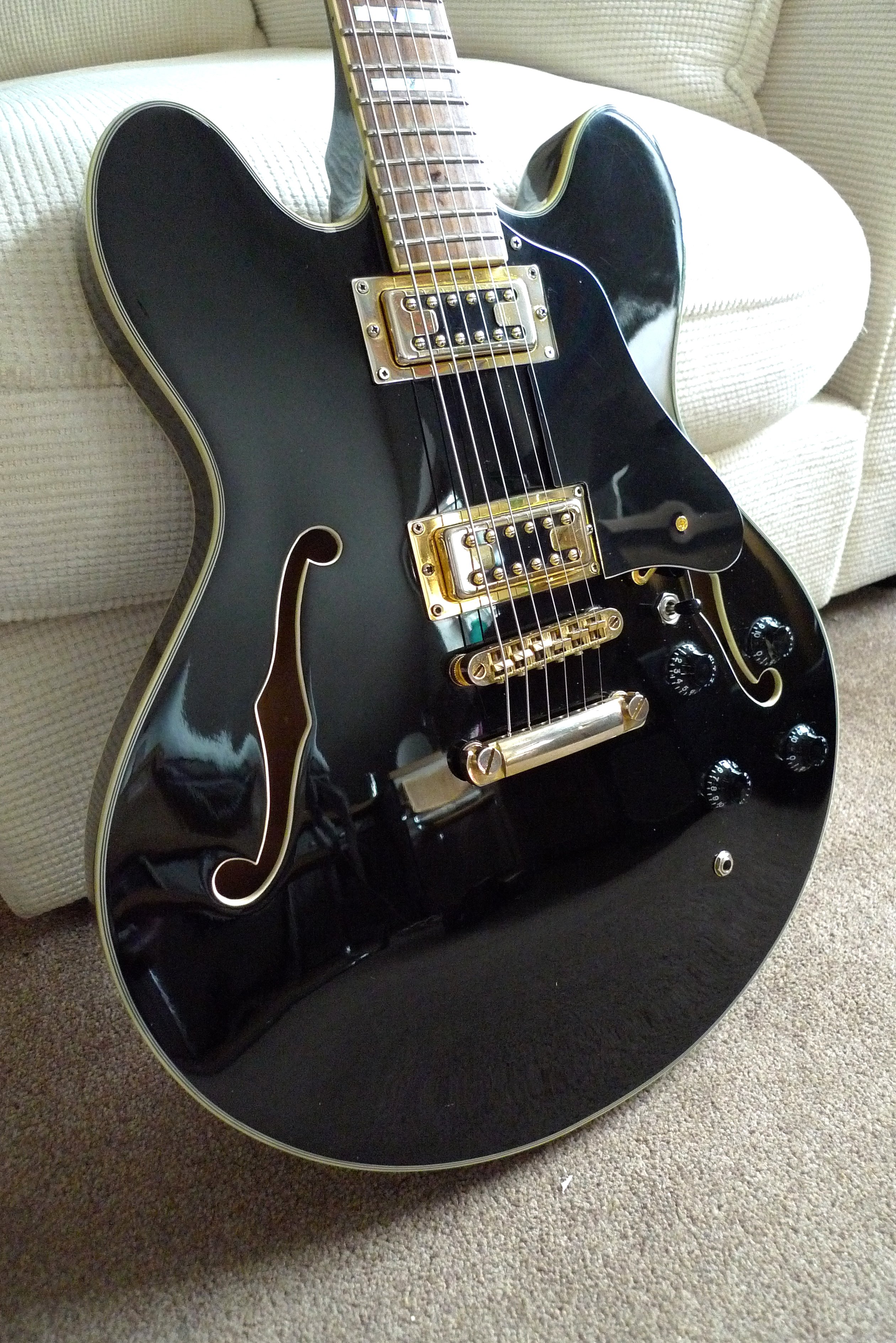
Put it all back together, polished it up and it plays just fine. What a bargain
 5 points
 -
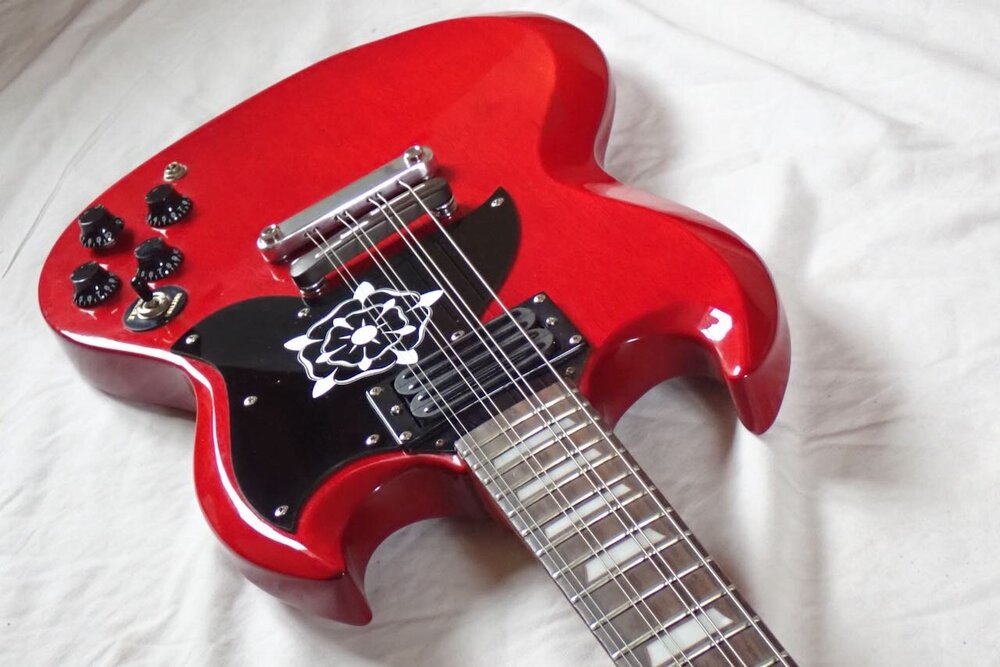
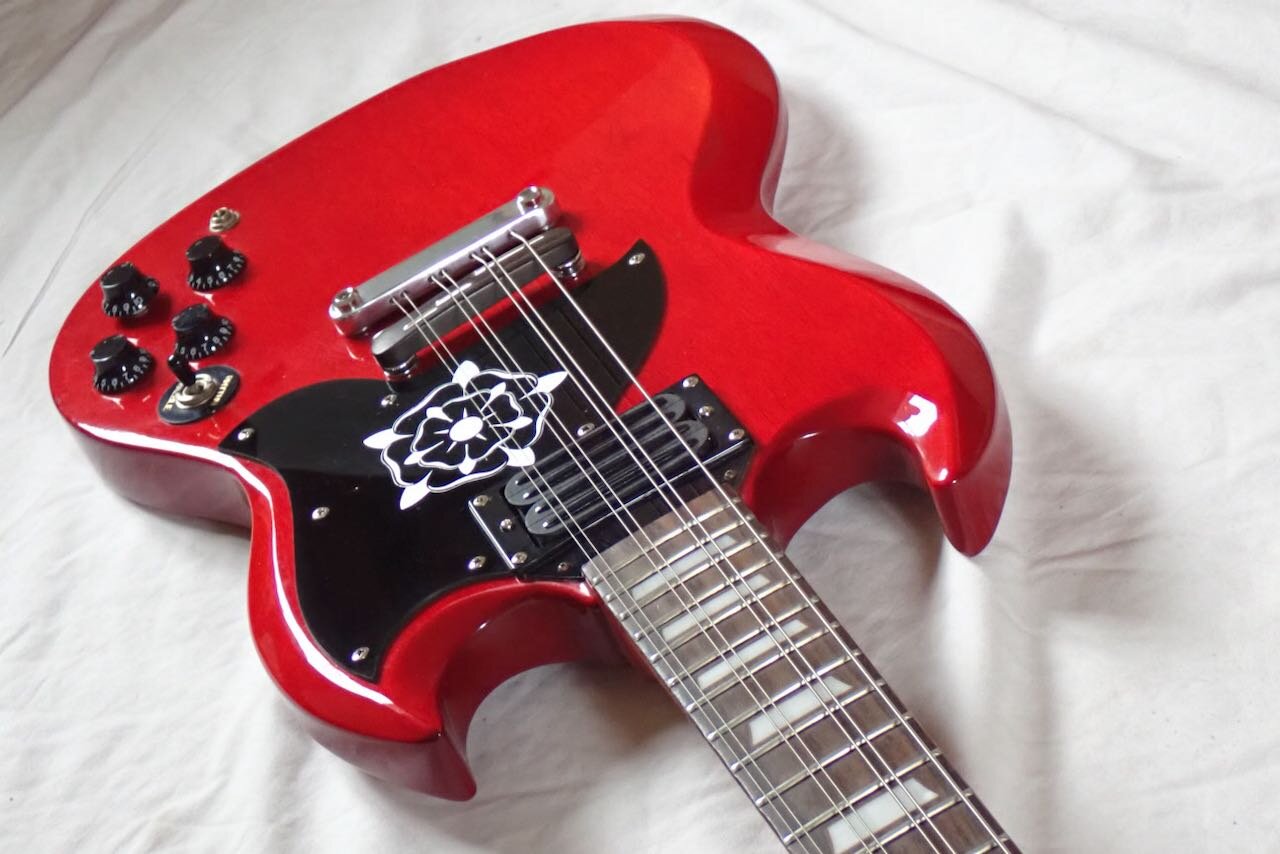
I don't think I've posted here before - I'm a member of basschat.co.uk, but after playing bass for decades, lately I've been singing and playing mandolin and octave mandolin. I don't actually play guitar, though I have a couple of guitar-shaped objects in my collection - an acoustic guitar bodied octave mandolin, and earlier this year a local guitar builder converted a copy of a Gibson SG to mandolin for me. I'm currently working towards a Rock School grade 2 acoustic guitar exam... with a mandolin!
.thumb.jpeg.a8aa32423136d3f8dec9b5734642753a.jpeg) 5 points
5 points -
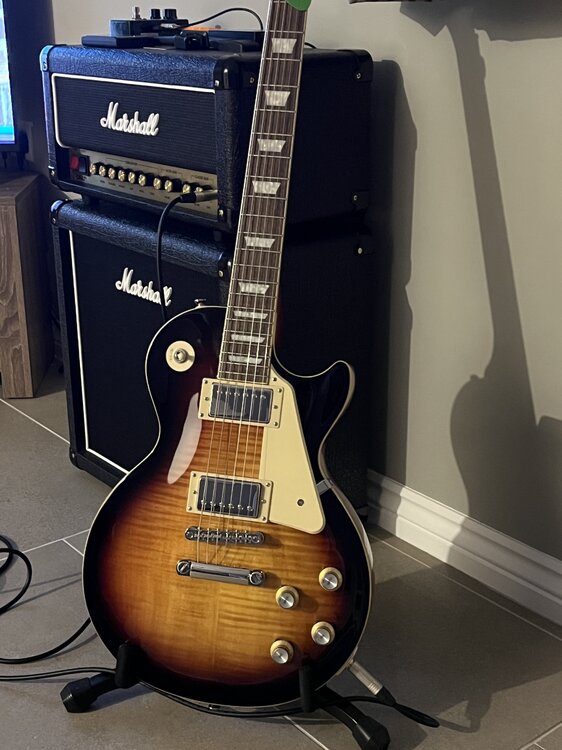
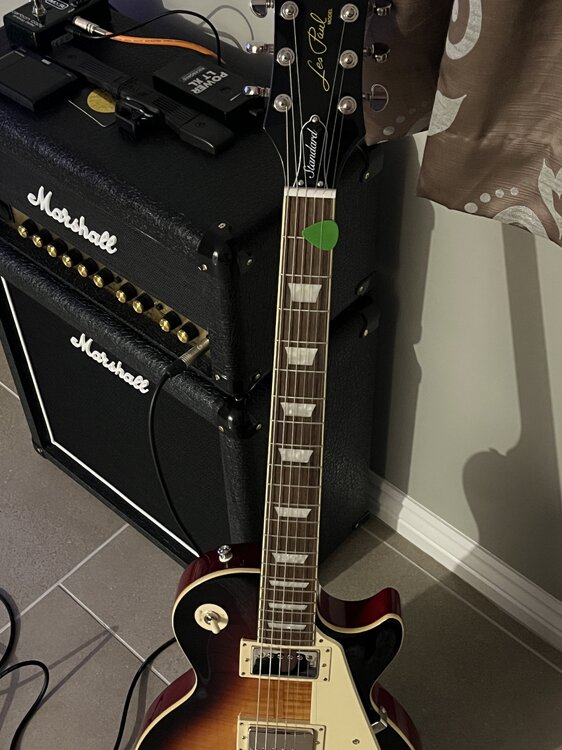
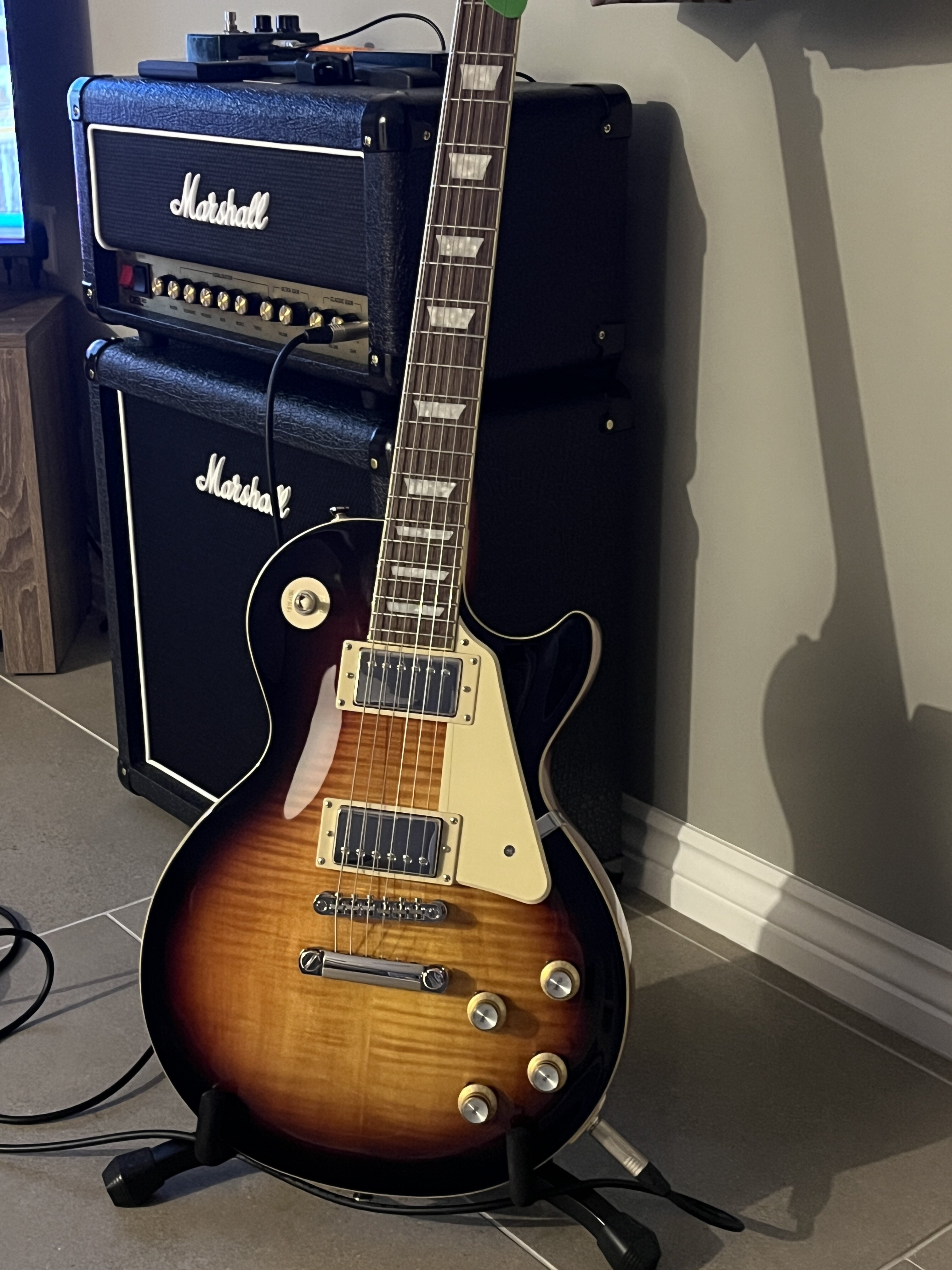
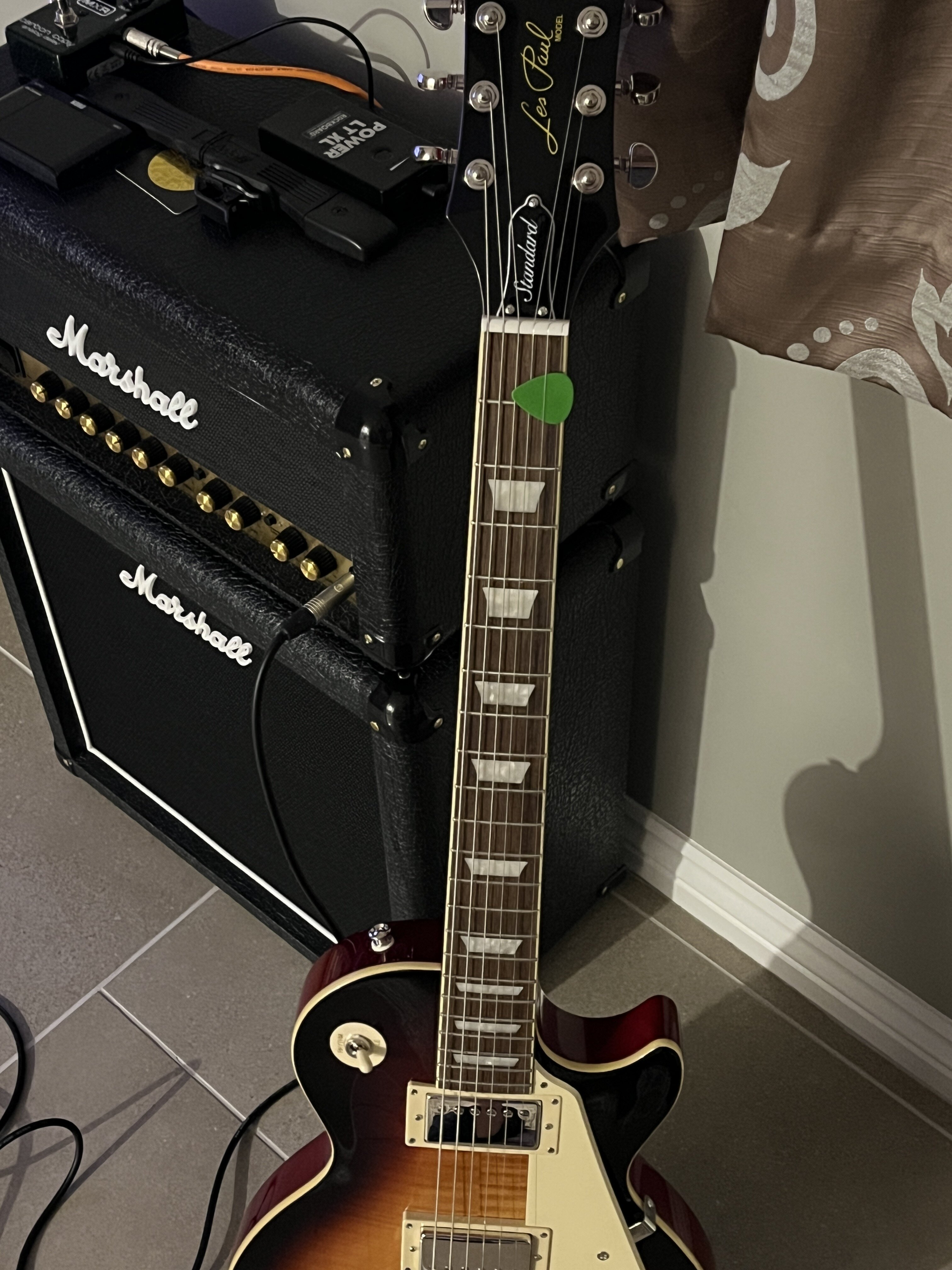
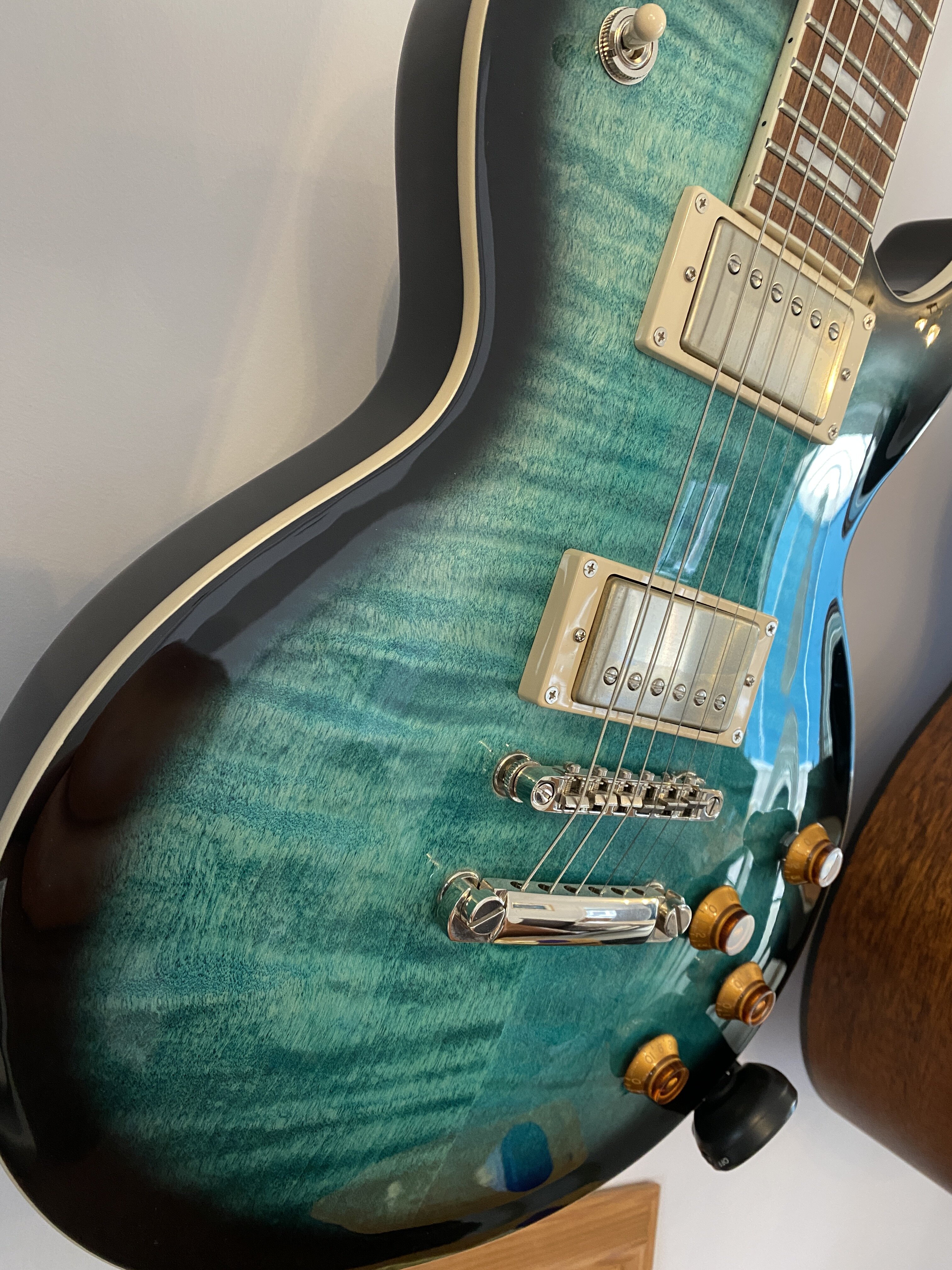
Decided to get the Epi Les Paul 60’s Standard in Bourbon Burst I had looked at PRS but decided this is what I wanted. Out of the box the quality, setup was spot on and amazing for a £500 guitar. Sounds excellent and pickups are very good and sounds great clean and overdriven They have definitely improved since I owned an Epi Les Paul Plus Top Pro about 10 years ago this is as close to Gibson quality you can get without the price tag ! Awesome guitar
 4 points
 -
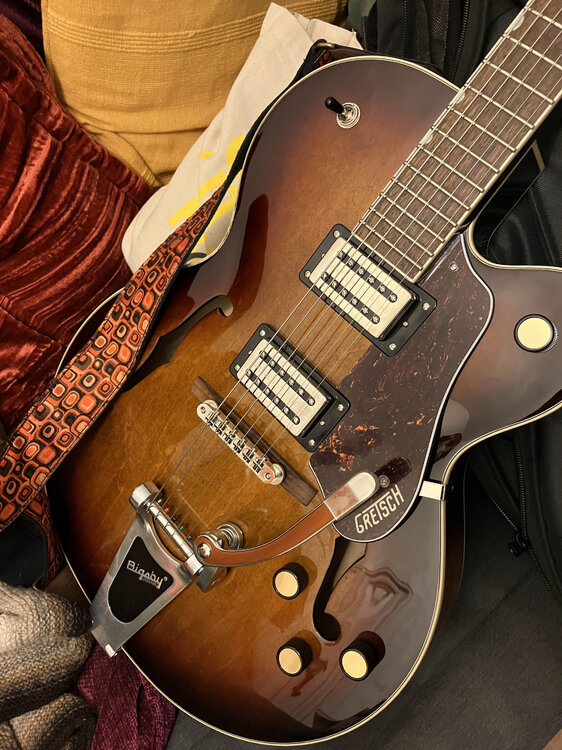
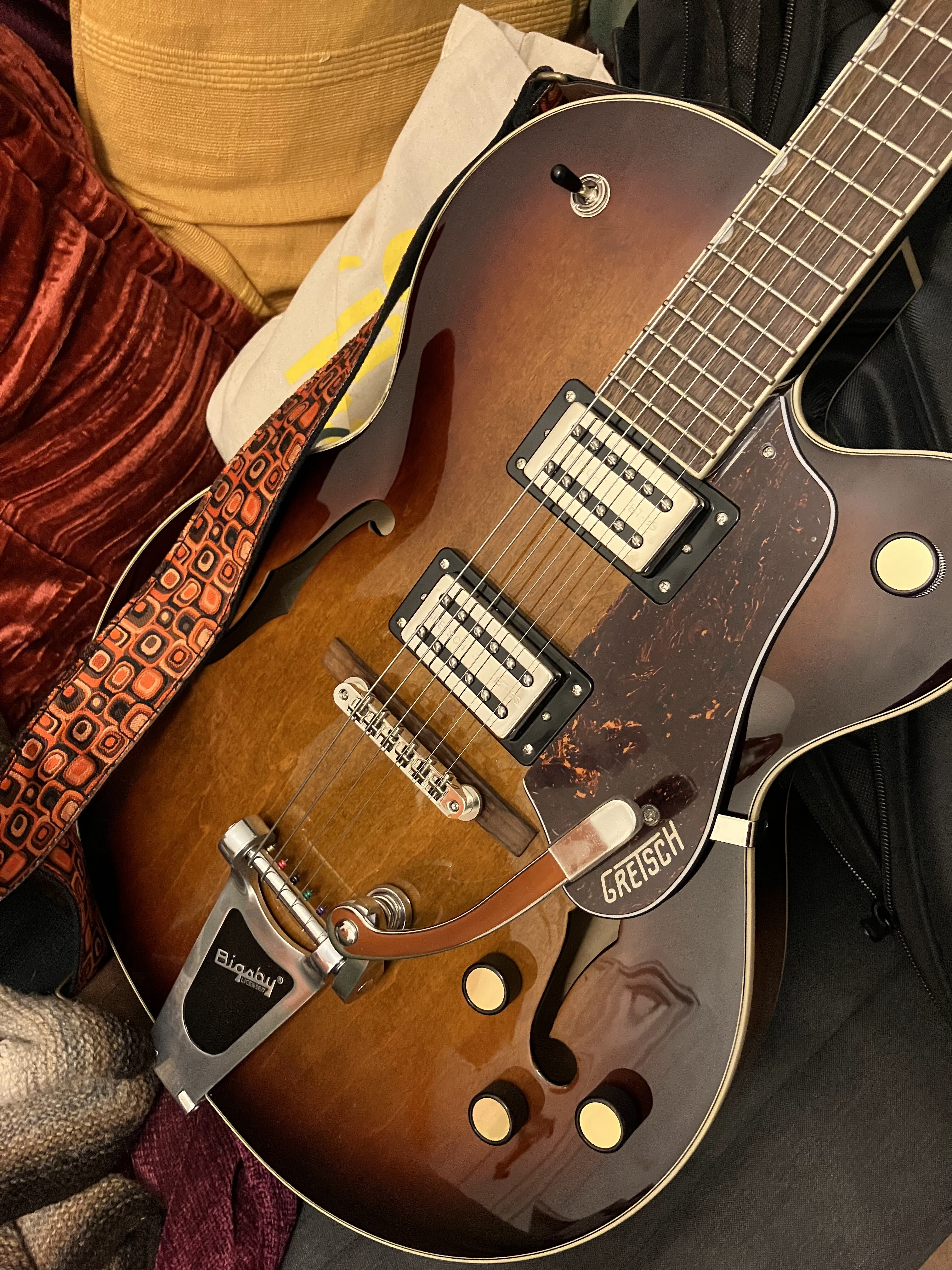
Thinking that I ought to have a hollow bodied guitar for jazz I bought a Streamliner and have indeed given that Bigsby a wobble from time to time despite it being considered inappropriate within the genre.
 4 points
 -
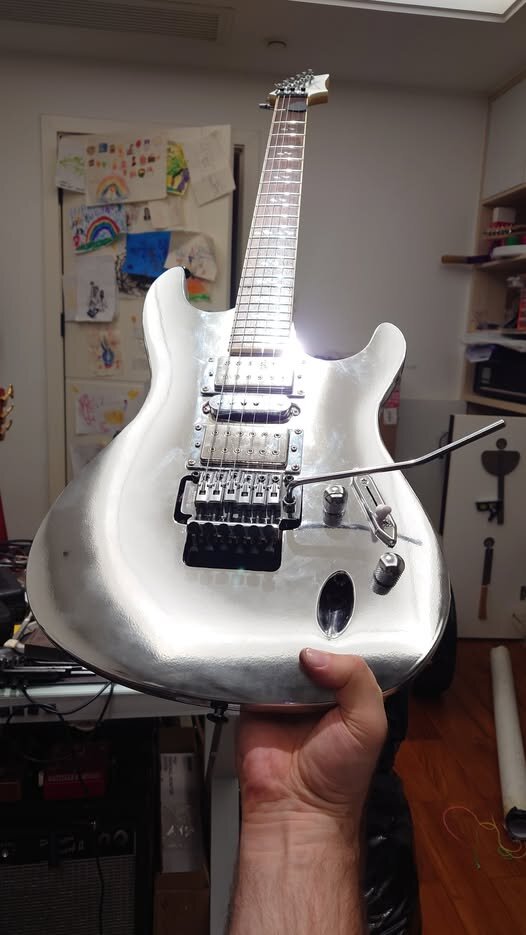
I picked up a super cheap Ibanez S670 with a fake body for 1500RMB ten days ago and went about upgrading, fixing and customising it with chrome Gotoh hardware and Dimarzio Satriani signature pickups. I wanted to do a Chromeboy painted finish but it's not possible to do it well on wood bodies. The original Chromeboys had finish cracking and bubbling issues do to wood expanding and contracting with seasonal changes, the follow ups had bodies made of lucite not wood. So I did the next best thing - bought a load of mirror vinyl wrap online and found a friendly auto wrapping firm to do it for me after my own attempt failed miserably. The reflection isn't 100% sharp but only really noticable when you are standing closer than 5 meters. I'm planning on using the guitar for a show coming up on Jan 11. The good thing of vinyl over paint is that I can get it re wrapped if it starts to look a little worn.
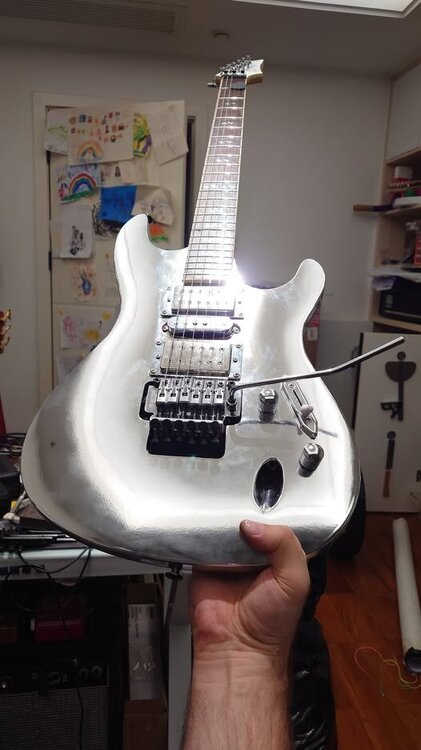 4 points
 -
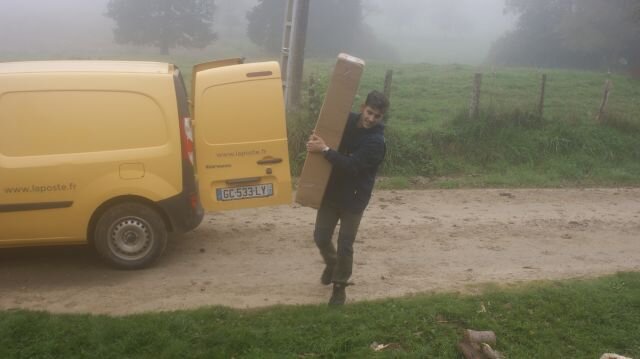
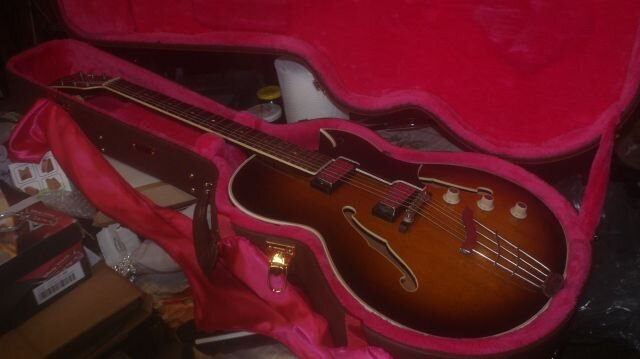
To better appreciate this event, I would refer you to a previous post here, where the 'back story' is quite fully related, so doesn't need repeating here. Skip it if you're in a hurry, but you'll be missing out. Soooooo... I've just, in the past few days, taken delivery of a new (to me, but not quite...) guitar that has been on my 'bucket list' for over half a century. A fellow member of our sister site (Basschat...) passed me a link to a site where this quite rare guitar was for sale, in Sweden. After looking up my finances (it was not cheap...), I contacted the Seller I 'bit the bullet', and, after some tractation over acquisition of a hard case for shipping, it finally arrived, safe and sound, snuggling up nicely in a brand new case. 'OK', I hear you ask, 'but what guitar is it..?' You'll have guessed if you'd read the post in the link above; it's a Hofner President Thinline E2 Florentine, from the late '60s, the same model that I foolishly 'let go' in my stoopid youth. Yippee..! Here's the photos I hastily took as it arrived... Pleased..? You betcha; pleased as Punch. I'm now struggling to get back to where I was, all those decades ago, trying to play a chord-melody version of 'Misty'. By a horrible coincidence, I had trimmed my nails, on both hands, and will have to wait a while before playing that way, as I have done since year 'dot', with only fingers, so I'm struggling at the same time with the use of a plectrum. It's all good, though, albeit extremely slow going. I have a Chromebook for displaying a Pdf of the version I'm using (from a Sandy Sherman YouTube video; just about the best and most accessible I've seen...), but as soon as I think I've assimilated a few bars, I turn the page to continue, but have forgotten it when I turn back again. I'm using my usual method of learning the 'outro' first, so that I'll be working into 'known' territory as I move forward, but, for now (it's been only a few days, but...) I'm finding it quite a job remembering only these dozen or so bars. It'll come (it has to..!), and I find the neck of this guitar to be exactly fitted to how I play (perhaps 'muscle memory' from all that time ago, when I learnt on that first President...). Anyway, enough rambling; back to the Chromebook for another session. I'll see about better pictures if/when the weather picks up, for outdoors lighting. Bye for now... Douglas
 4 points
 -
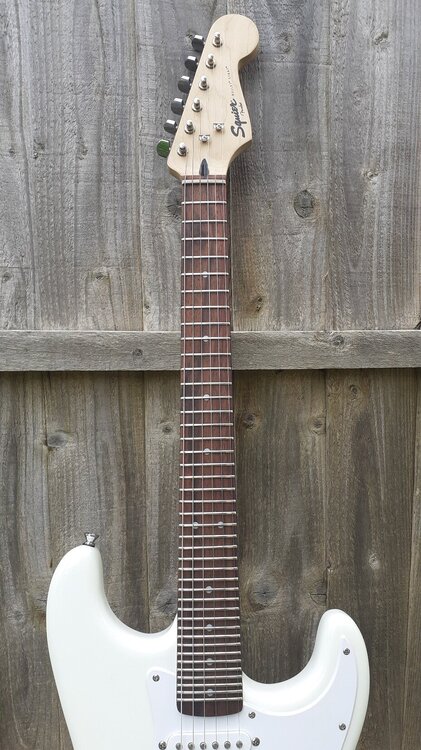
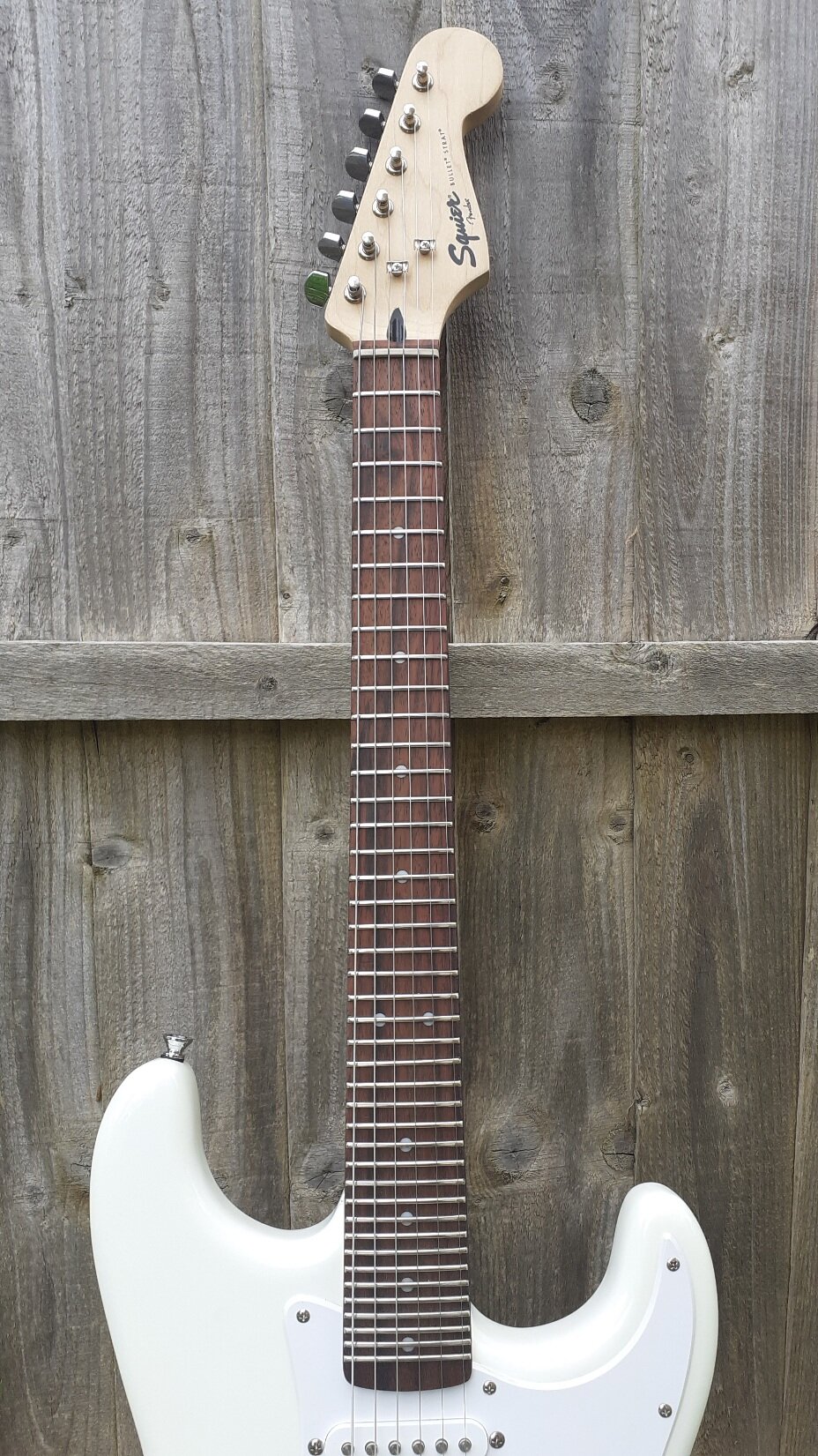
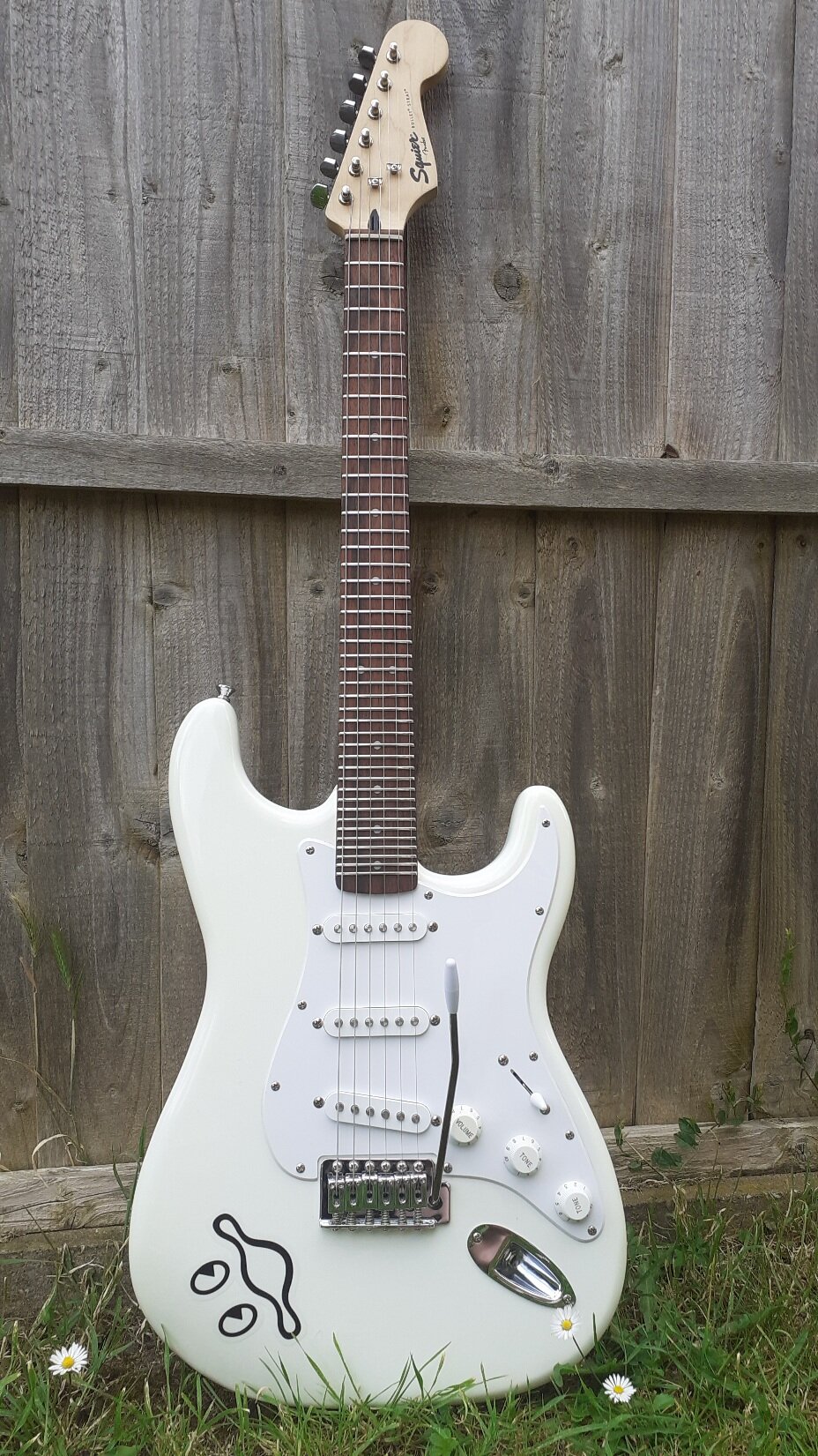
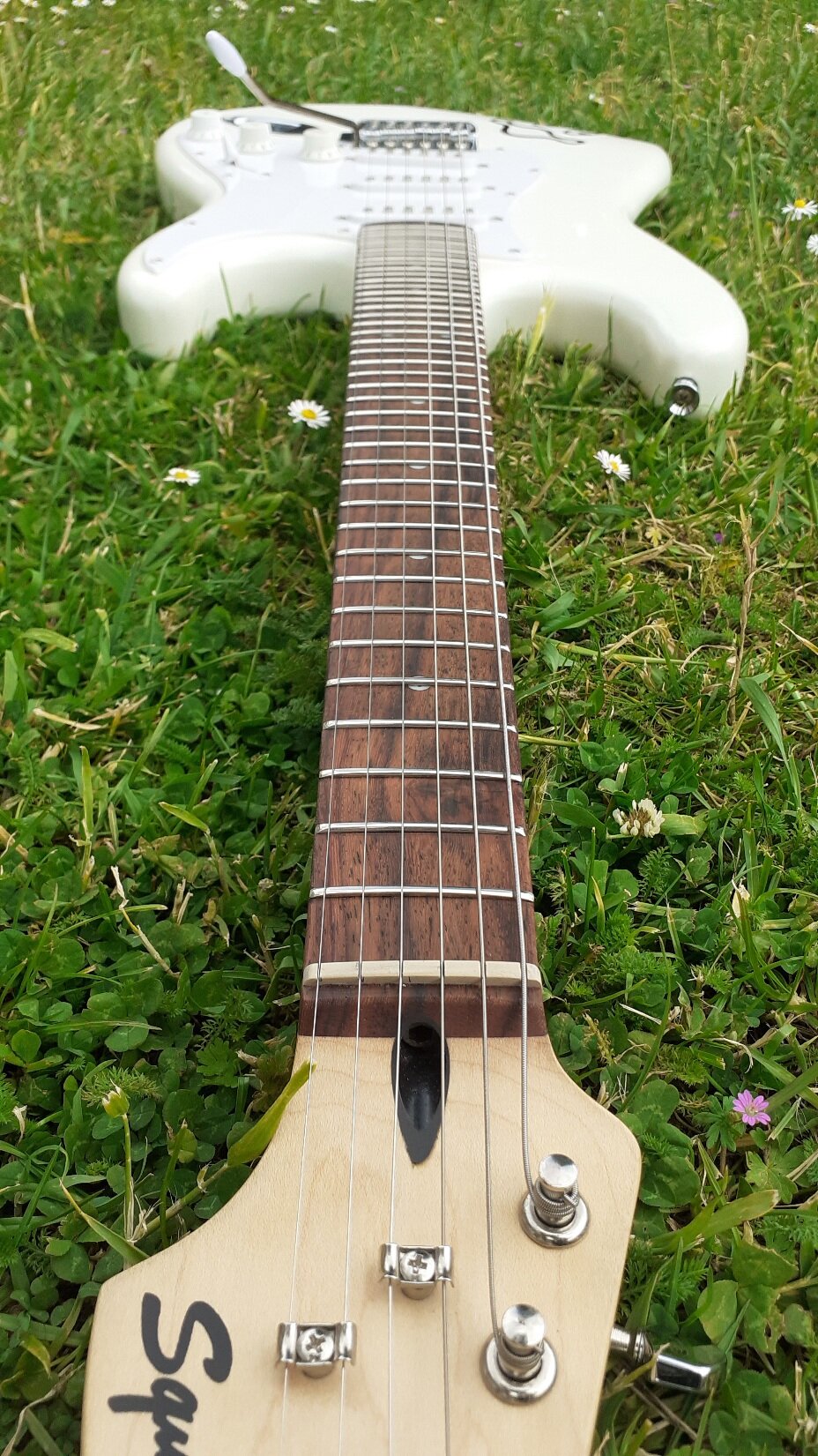
Son(16) is a fan of King Gizzard and the Lizard Wizard. Cheap Squier Bullet Strat from Cash Converters and a Most-Marvelous Inter-Fret Job by @Andyjr1515 fella who sits (slumps!) at the bar in the BassChat Arms... (Blah! Blah! and Pics in a BassChat Tech&Repair post) https://www.basschat.co.uk/topic/496955-microtonal-fretting-microwhat-but-sorry-not-on-a-bass/?do=findComment&comment=5264843 When 12TET and 20 or so frets just arn't enough... go 24TET and over 40 frets to play with!
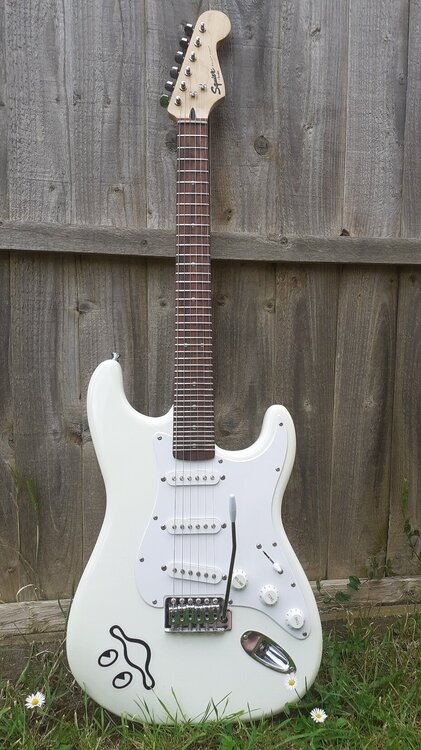
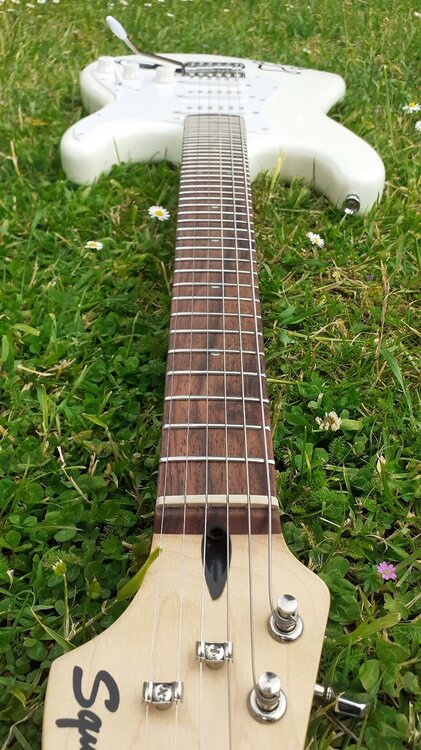 4 points
 -
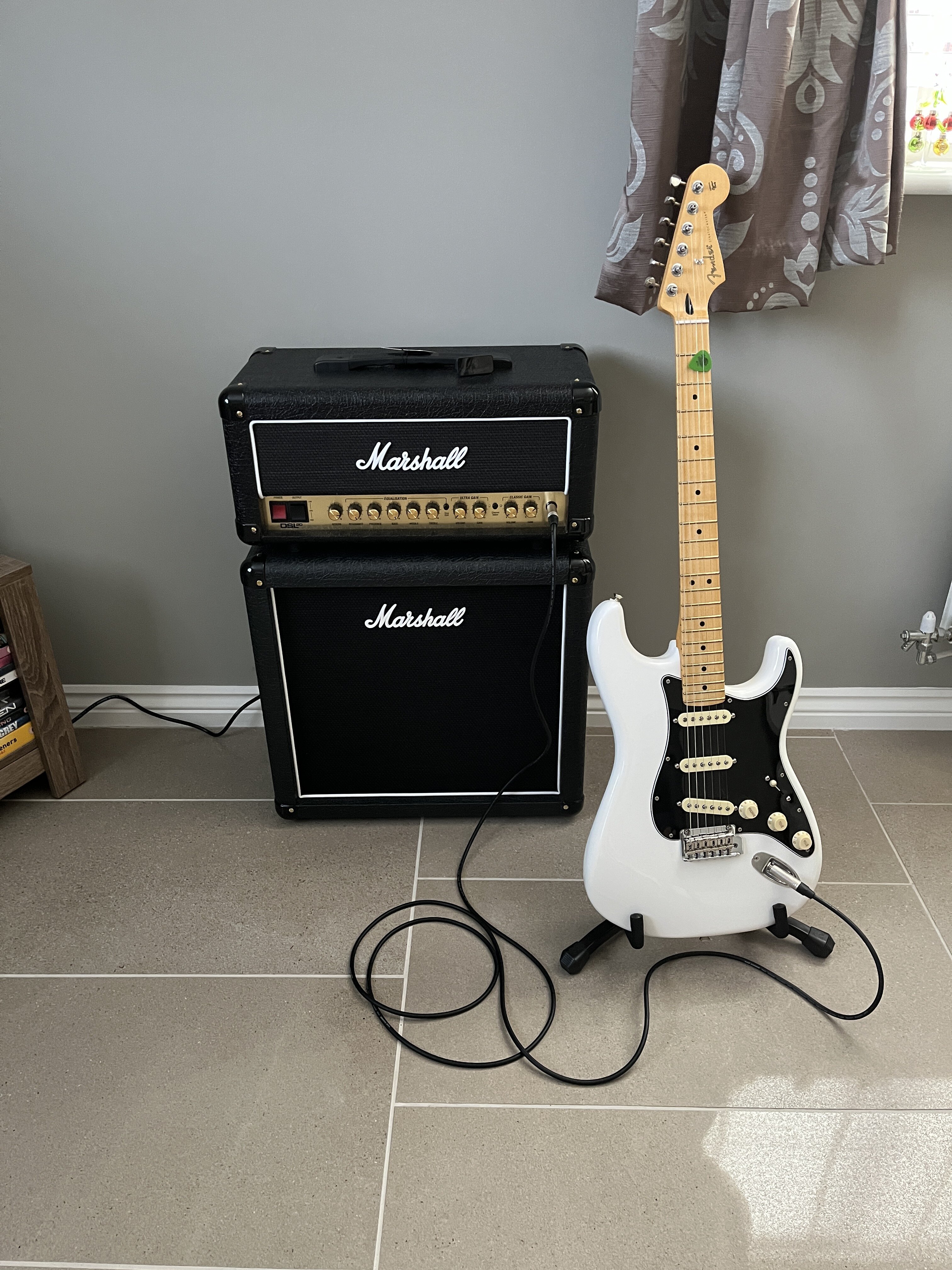
Thanks everybody for your answers and contributions. Made some interesting reading, and some great model photos. Just before Christmas, I privately bought a Marshall amp. The owner asked if I would also take his old black and white Strat off his hands too for a meagre £30.... It was an exact double of the one in my original post with identical headstock and weight. Well...you can guess the rest! Cheers again for all of your input.4 points
-
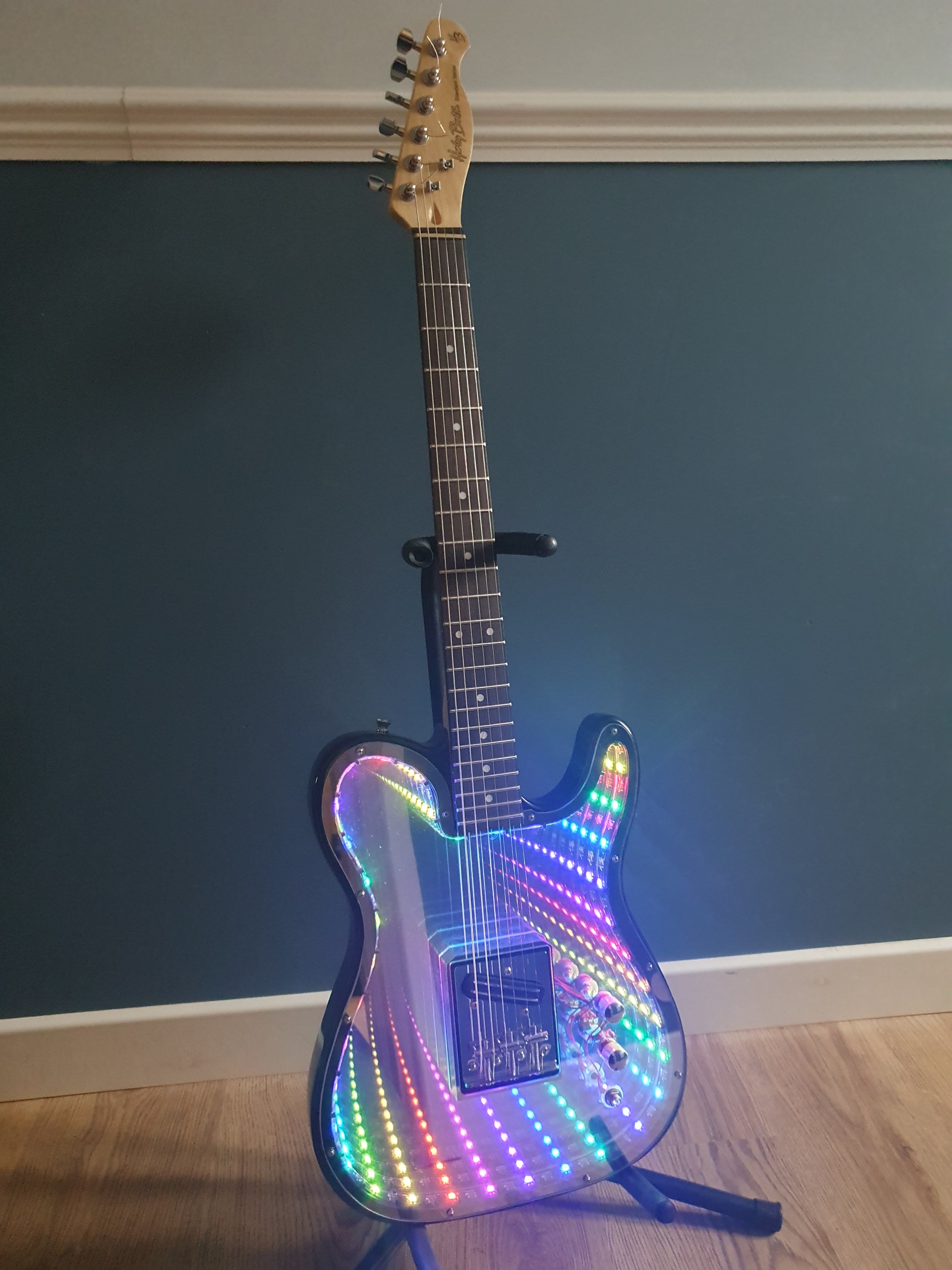
I think HB are great value guitars and worthy of modifying too...here is a Youtube video showing what I do to them:- Infinity Mirror Guitar v3 with hot rail pickup.
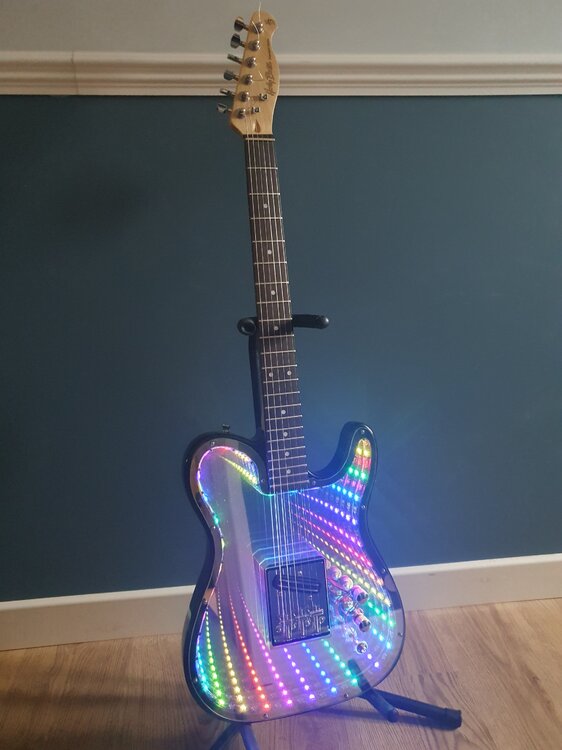 4 points
 -
Quick update to say I pulled the trigger on the Thinline Godin. It's new, coming from the States and even with delivery and taxes will be £300 cheaper than the best price I could find in the UK!
 3 points
 -
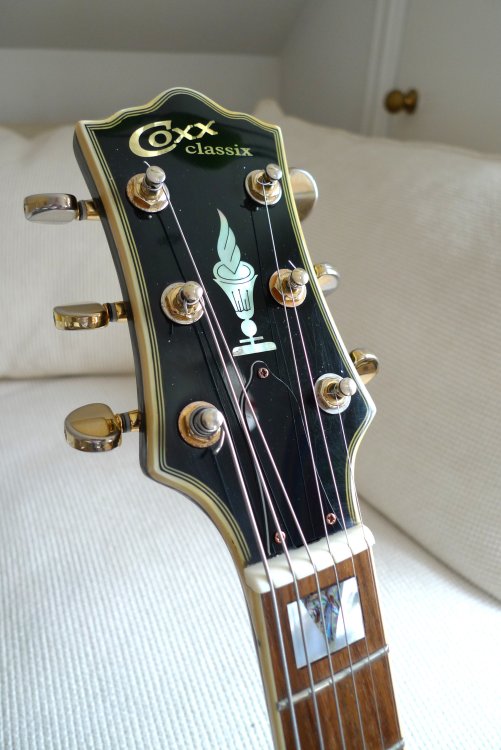
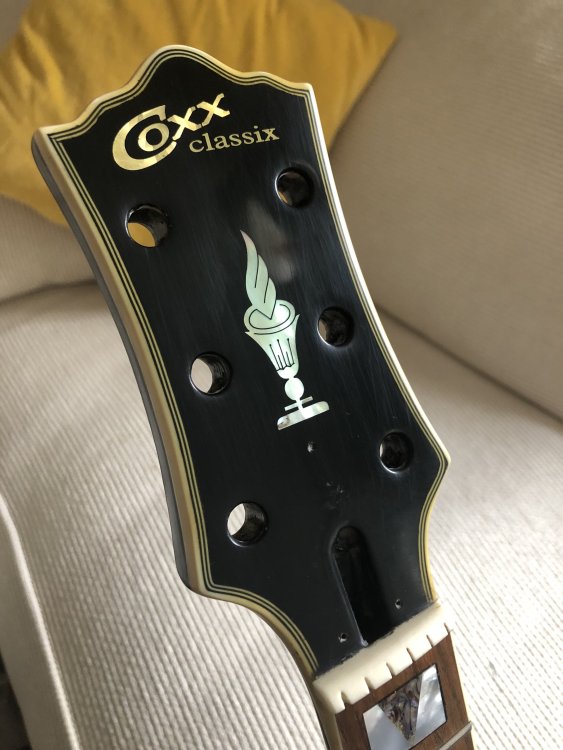
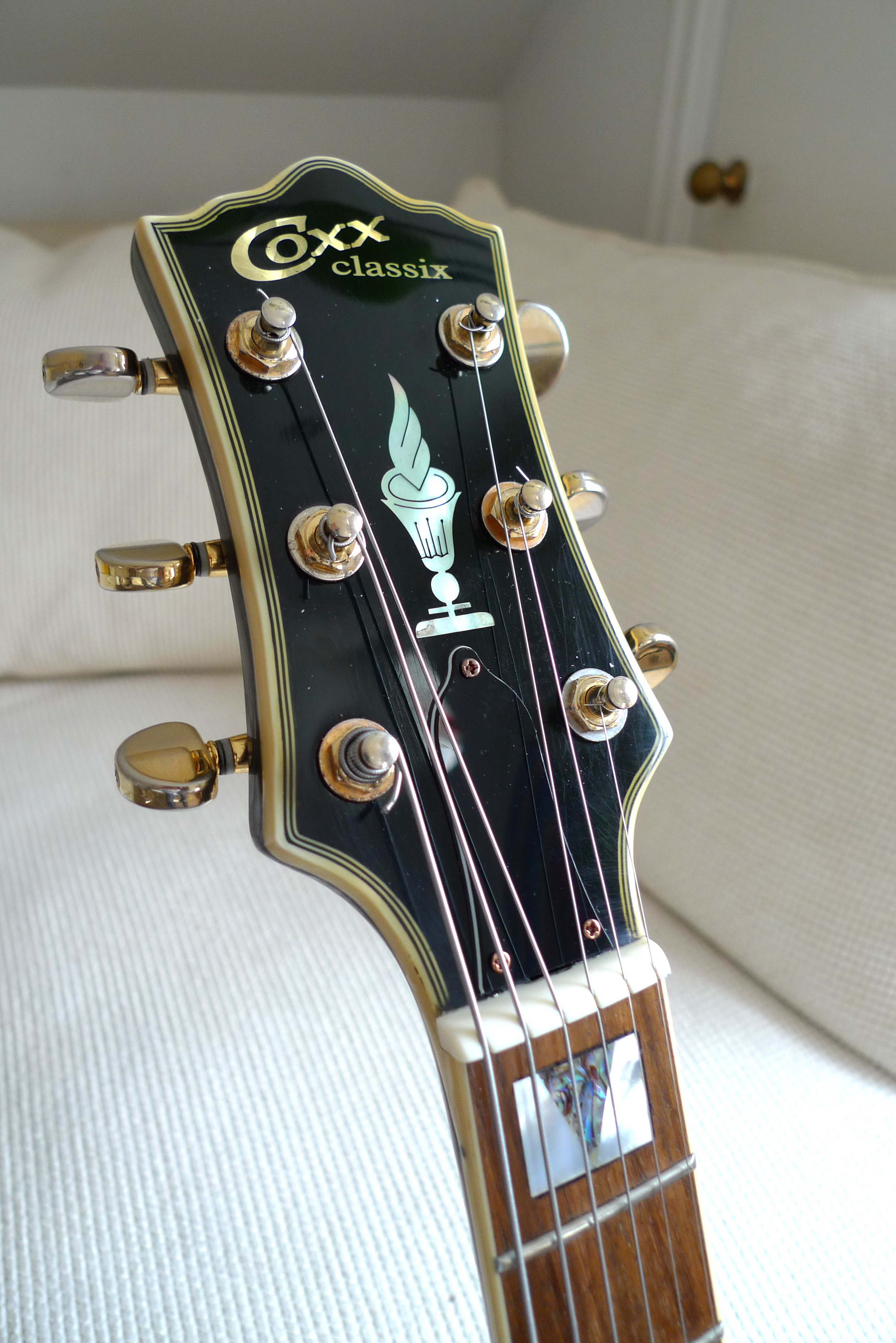
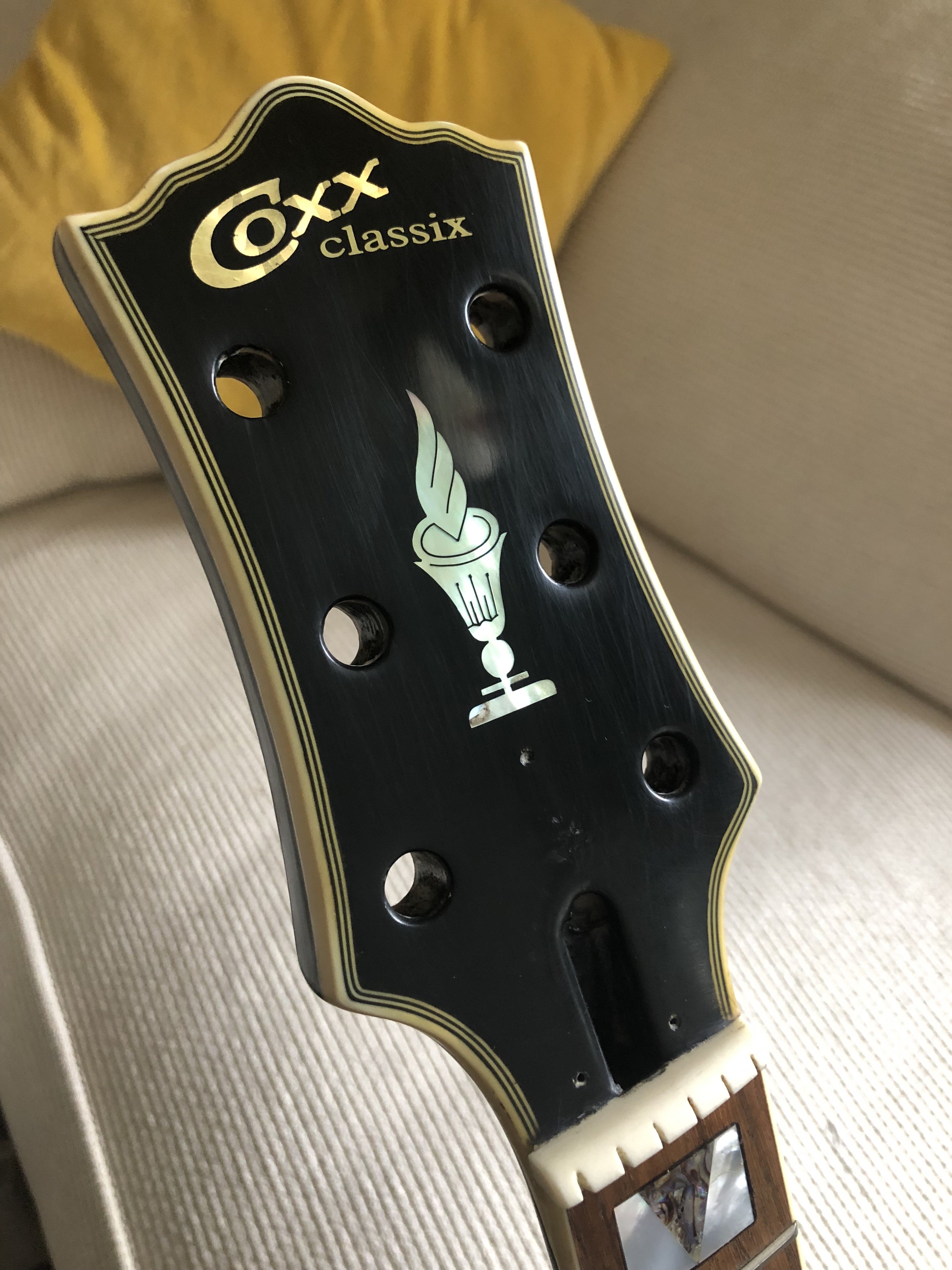
After a bit of work with fine wet and dry and a polish up with brasso, it transpires it's a Coxx Classix.
 3 points
 -
What a palava. OK so GC has been offline for a few days due to a mix-up in transfer of content from the old server (which was upgraded due to email notification issues on BC) to the new server. The old server subscription cancelled last week taking GC down with it. Then we had issues trying to get things set up on the new server. As you can see, we have managed to restore GC but the only back up on the old server was from January. Sorry sorry sorry sorry sorry to any of you who had made the effort to post detailed or lengthy replies during that time, I've personally lost at least one lengthy post as well. If you need to flame, go ahead. We had to unravel a whole load of secondary issues to do with databases not working quite right, upgrades not installing quite correctly, DNS and nameservers not being what they should be. However, thankfully, we have made it through the other side and GC is faster and more stable than ever. I don't expect this perfect storm to happen again and thanks in advance for your patience and understanding.3 points
-
On Saturday we had a work party where we provided the entertainment. About six weeks ago I rounded up a bunch of colleagues and proposed we do a song together. Below is the result: 52fb7b34b4790dbaf517c3d5cce802d3.mp4 It was my first time performing on guitar and I used the instrument mentioned here: All sorts of technical issues that I won't bore everyone with but the band had no right sounding as good as this recording suggests. I originally rehearsed with a 4U rack containing my beloved Triaxis and MPXG2 into a Marshall 20/20. But there were 60Hz hum and phasing issues so I swapped the rack for a Kemper and used a profile of the Triaxis instead with only marginal improvement (no more phasing). The Kemper went into two Hotone Loudster Class D power amps sat on a pair of Joyo 1x12 cabs loaded with Celestion Neo Creambacks. The speakers struggled to disperse, but this shouldn't have been too much of an issue if we had been given PA support. Unfortunately the video stops just before I move up front for the solo guitar breaks. I did the thing though - one foot on the monitor. No hair in the wind unfortunately.3 points
-
Hi there! I just joined a new band called Sons of steel. This is one of our singles: Let me know your opinion about it. Thanks!!3 points
-
This year a Joyo "Oxford Sound" pedal. So far I'm very pleased with it - lets me go straight into our PA without lugging an amp around.3 points
-
When singing a melody through, in your head or out loud, try to pick out the highest and lowest notes, when you get to them. That's when to pick up the guitar and find those notes, and only those notes. That'll determine where on the fingerboard the rest of the melody lies, so, having established the extremes, now find the initial, starting note, keeping in mind these extremities. Does this help..?3 points
-
If you can afford it and it will make you happy then do it. I personally am a tight arse and even if I could afford a Gibson (I can't) I'd never buy one because I'm a klutz and it would be an expensive thing for me to damage, same goes for a Ferarri, I'd have door pockets full of crisp packets and I'd no doubt kerb the wheels parking it.3 points
-
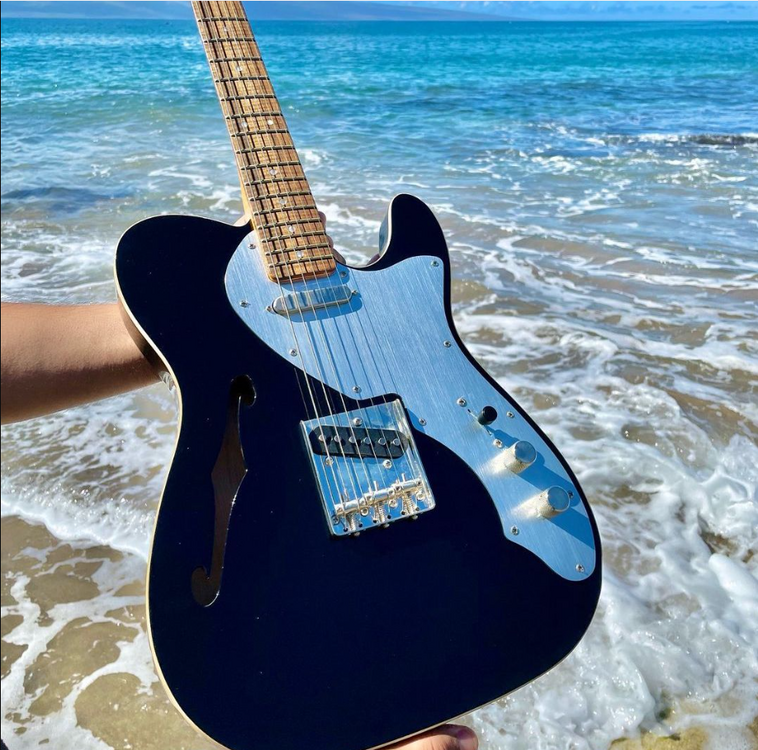
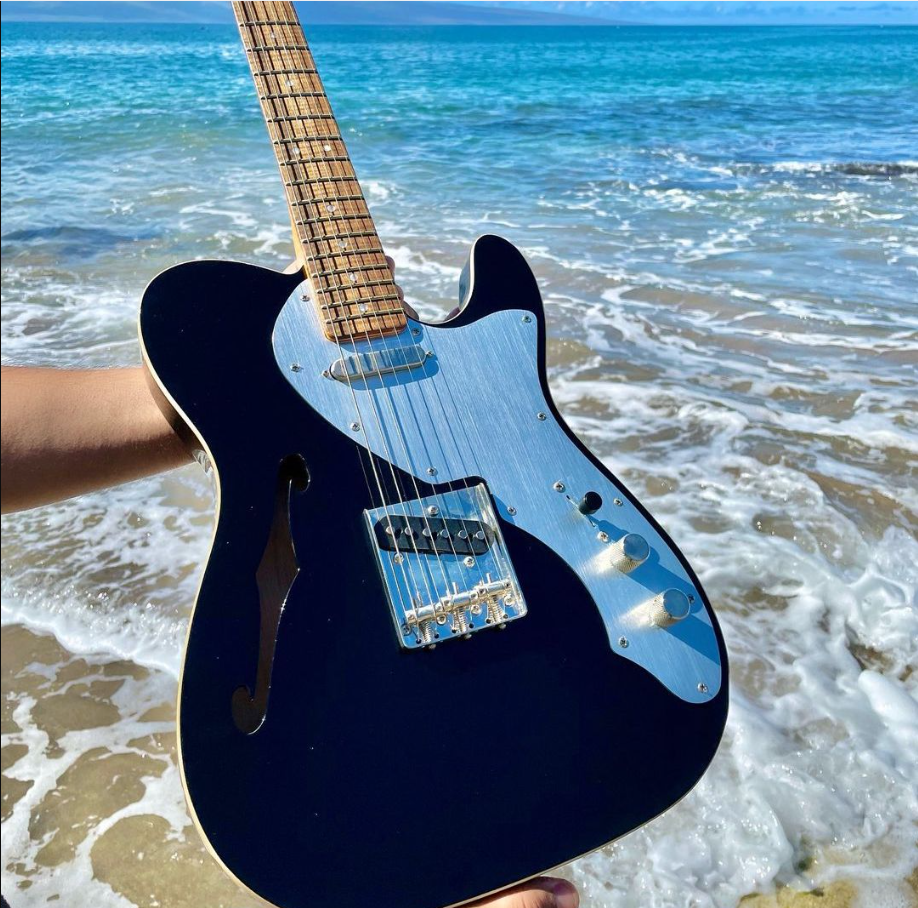
There is a chap on Instagram named Ohms in Hawaii and he posts beautiful guitars on the beach like this photo: There are hundreds of posts just like this one, these photos really warmed my winter mornings.
 3 points
 -
What about selling it and buying a nice gift for the donor, or explain to him that you aren't getting on with it and ask if he would mind you selling it. You could offer him all or some of the money minus any expenses.3 points
-
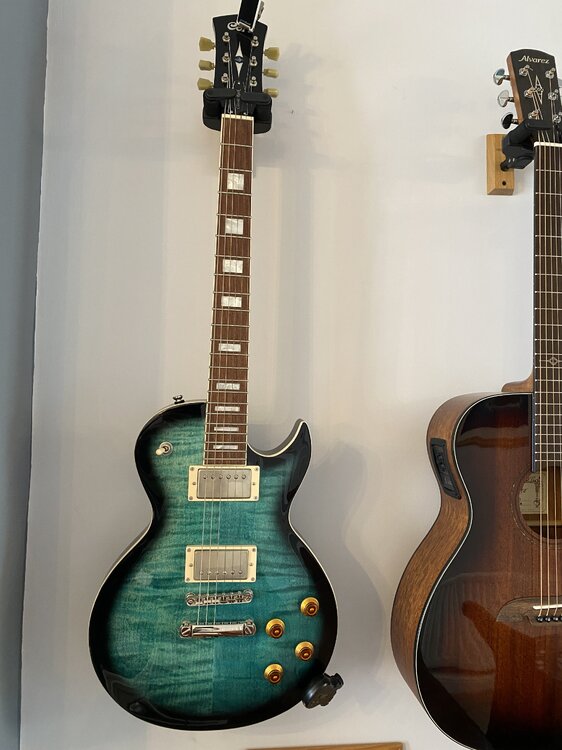
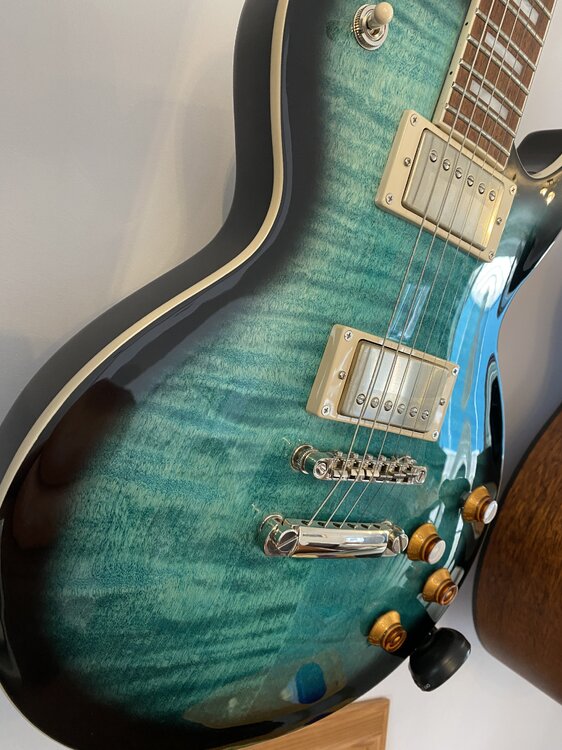
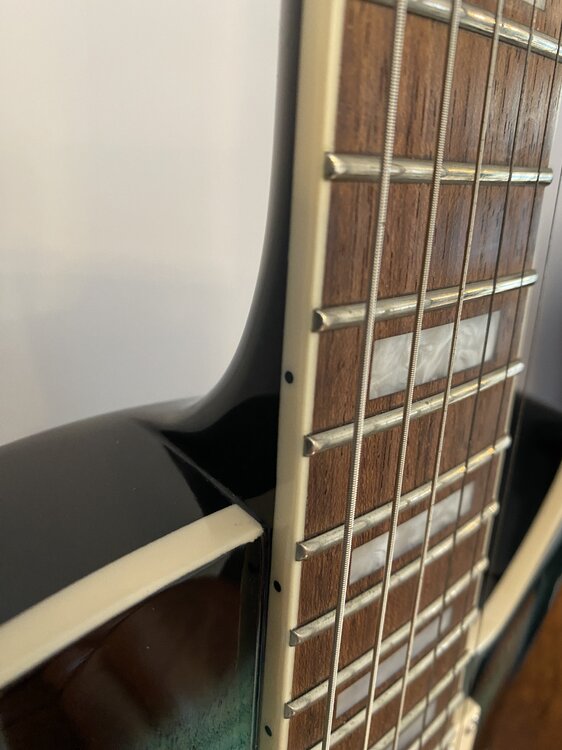
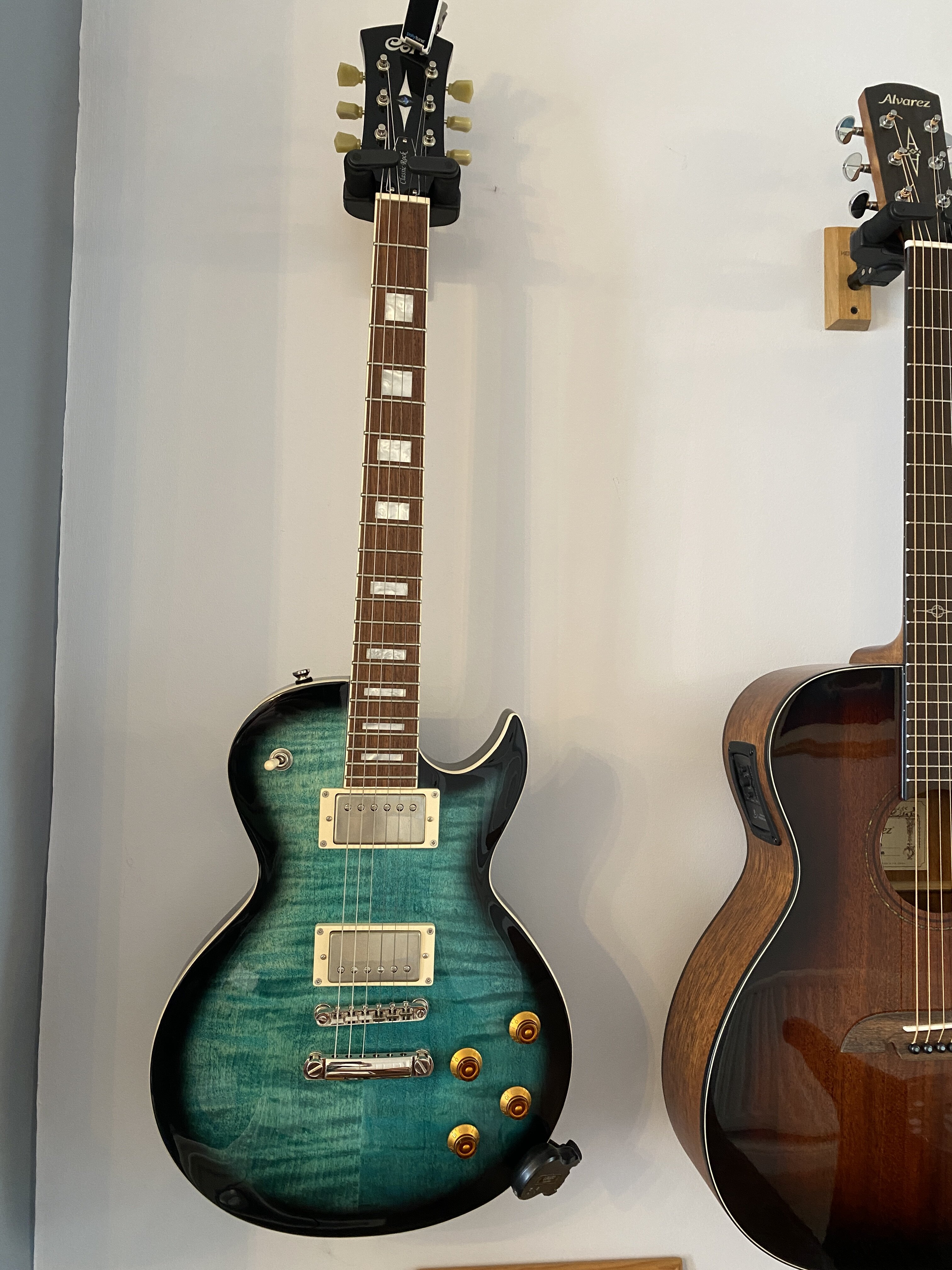
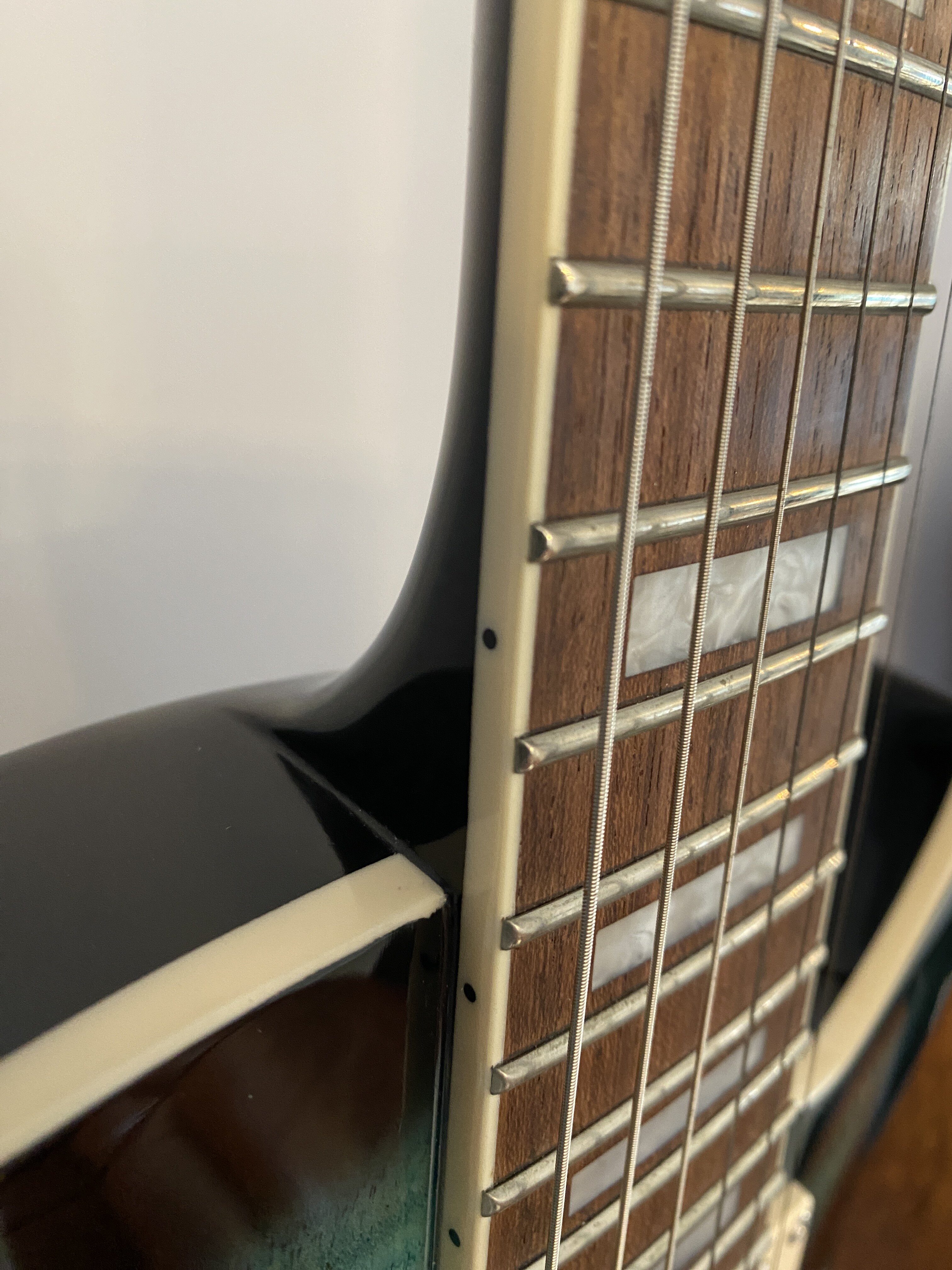
Here it is, about to get treated to a good clean and some new strings. Setup seems spot on but I’ll check it all and set the pick-up heights to suit. The overall finish is superb - not just for the price but for a guitar of any price. The binding is lovely and clean with no gaps or flaws that I can see and the fret ends are super smooth (the frets need a good polish though). It needs a good clean up and some oil on the fretboard and I may swap the volume and tone knobs for black ones at some point but I do think I’ve blagged a real bargain for once
 3 points
 -
Apologies for the two months absence - super busy with life stuff! I hope anyone who's still around from last year are keeping well & have had a good start to this year! On my front.. bad news is I didn't have time to record updates or really progress much through modules... However.. good news is I still managed to put in circa' one hour practice pretty much every day which has just helped me further cement the early foundational stuff as well as the new things learned in the first module of grade two, which I've now completed between the start of Jan & now... in the next module I'm about to start I (finally) start taking a first look at the F.3 points
-
Steady on, it's not like some of them need extra reasons to slap a premium on a five quid set of parts.2 points
-
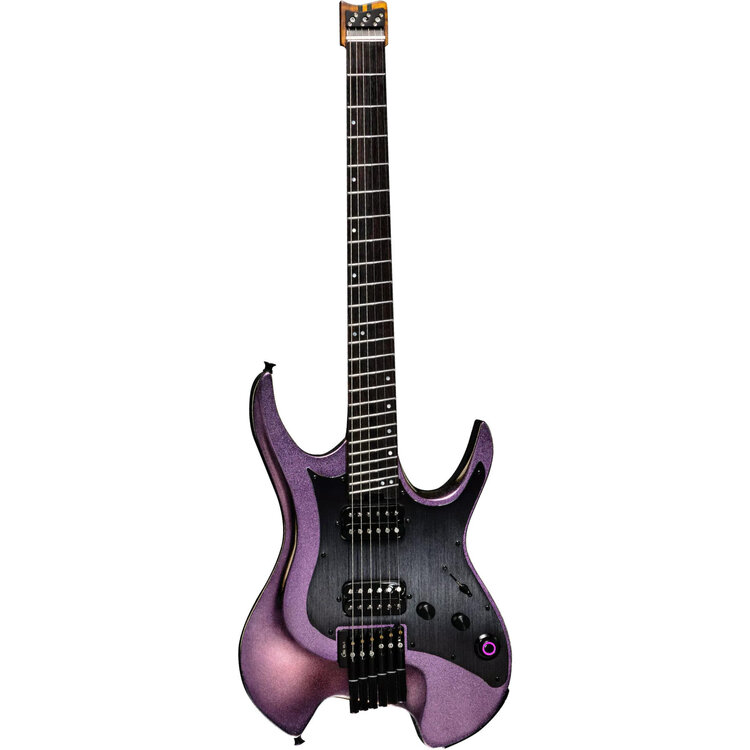
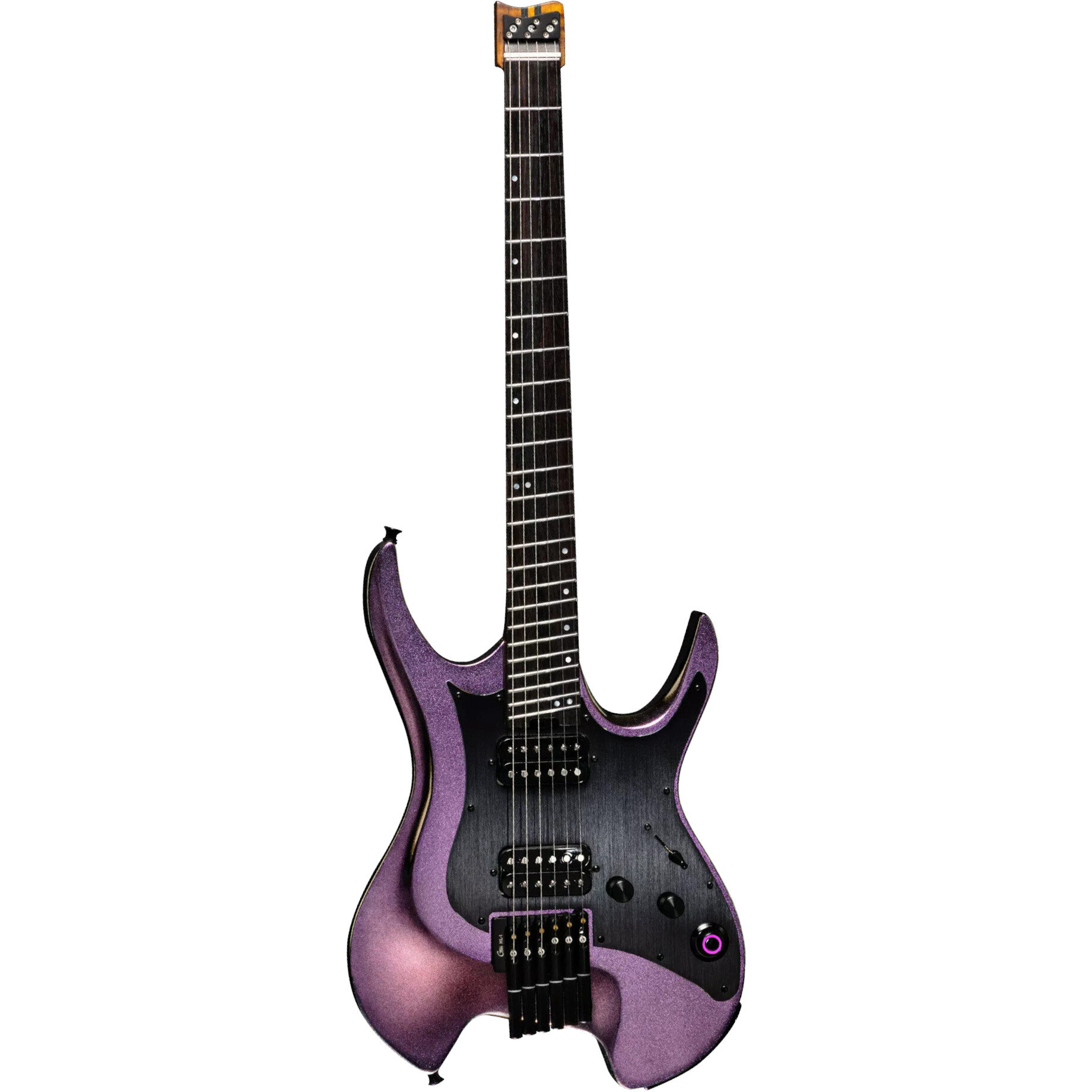
Just browsing the web the other night and came across this and on looks alone I knew I had to have it. I watched the youtube reviews which were all really positive but was still cynical as I had fallen for the reviews on the Lava ME guitar which I though was a pile of trash. Anyway I pulled the trigger and bought from Andertons knowing I could send it back if it didn't work out. The guitar arrived the next day. It came in a lovely padded quality gigbag so first impressions were good. I got the guitar out and it was stunning ( I know this bit is subjective !) with the flip paint job and headless roasted neck. I tuned it up and it had been set up perfectly, the action was fantastic and intonation correct. I bumbled through setting up the app which controls it - the manual is very brief and does not give you anywhere near enough info, however from what I'd seen on Youtube I got it working. I played it through a newly revalved and Celestioned up HTR-1 amp using the wireless dongle straight into the amp. The guitar has fanned frets which I'd never played on before, but within minutes I didn't even notice them. So I've put it through its paces over the last couple of nights and it is truly phenomenal. The presets are brilliant and infinitely adjustable - none of the widdly robot sounds that you get on multieffects as filler. The modelling guitar feature definitely changes tone - whether it replicates a '58 LP I'm not sure but just scrolling through the models I could get some lovely tones. Volume and tone knobs are really responsive .The guitar has a built in looper/ drum machine which worked well - I subsequently stumped up for the wireless footswitch to make it work even better and was that impressed with the tones and flexibility even ordered the Prime P2 to use with my other guitars. In summary, this guitar might even be the best one I've ever bought and there have been lots , customs , Fenders, Gibsons, Ricky's - but none of them had ever been set up this well or had the OMG factor this one has Anyways it's nice to report something this good rather tha being underwhelmed.
 2 points
 -
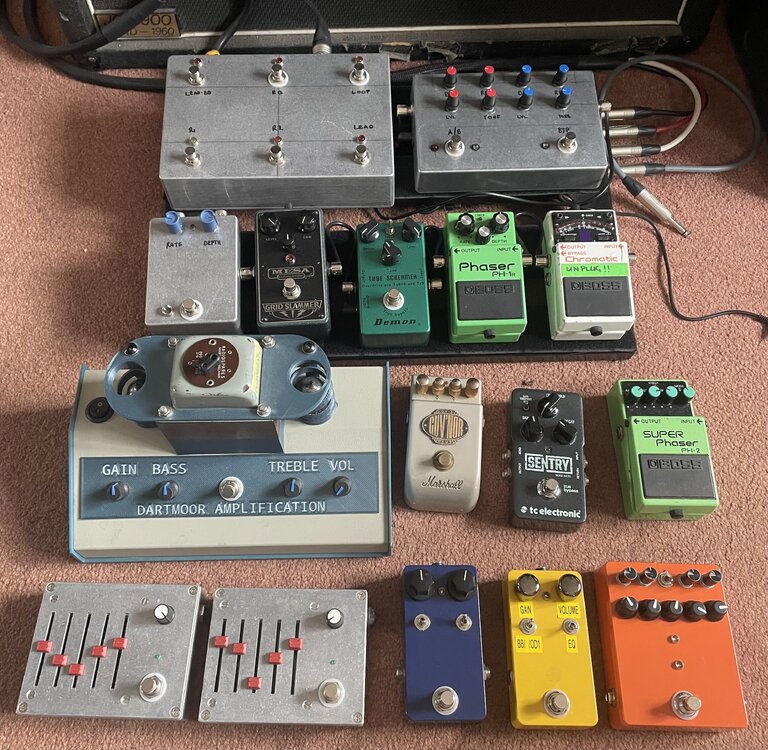
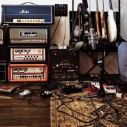
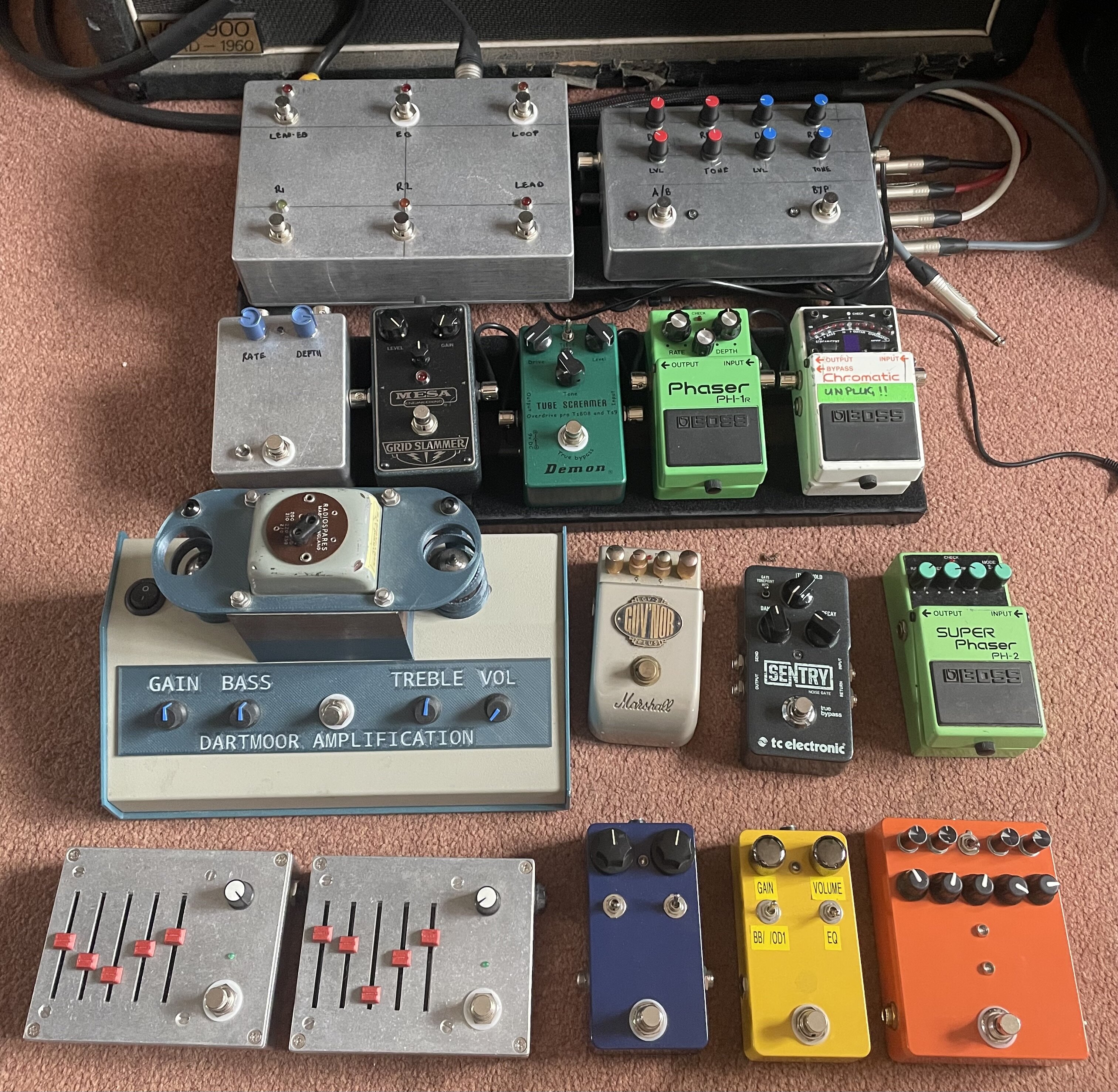
here is the current board with some diys and some stock pedals. More diys kicking about and more Boss to add on a new board for part of my rebuilding the rig of my youth
 2 points
 -
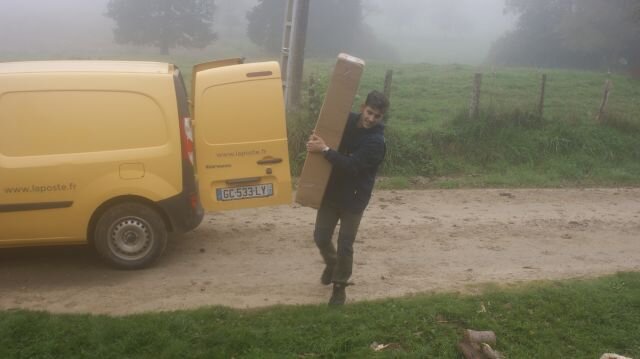
I had already pre-empted Christmas in offering to myself my bucket-list guitar : a Hofner President E2 thinline, Florentine cut, having foolishly traded away the first one I had, late '60s. Half a century later, I got this one from a Reverb seller in Sweden. The Christmas gift..? Our Daughter, thinking (rightly...) that it would be difficult to find something I'd want/need that I didn't already have, posted a sum of money into my bank which covered the cost of the hard case and shipping of my dream guitar. Much appreciated, and a Very Nice Surprise. Here's a (bad...) photo of the delivery and unpacking of the guitar...
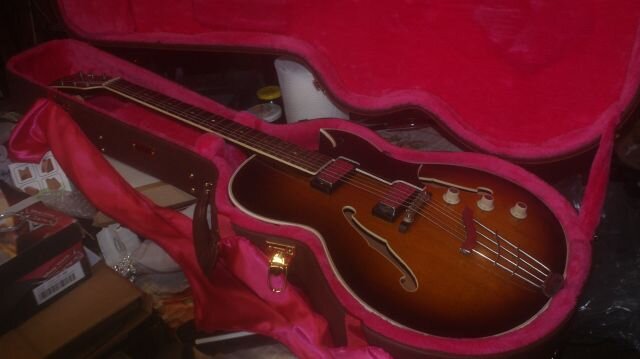 2 points
 -
This year: A book on jazz guitar comping concepts.2 points
-
There are posting settings saying you need 5 posts to be able to post in general. Seems a bit high, but otherwise, you probably have enough post count to now do it!2 points
-
The DSL20 is EL34 paired and I would say it’s more 80’s to modern day rock I have the DSL20HR and it’s a great amp and can run at home at 10w It will sound much better cranked of course when it really shines The Origin 20 head is better for 60’s 70’s rock and with a drive pedal in front would cover most ground. I had the Origin 50 head in my old band and it was a lovely sound. For home I think the DSL20 is a good choice as it can still gig or jam or play at home Boss Katana is a good choice too but I still prefer valves I briefly tried the Laney Lionheart Foundry 60 but it was poorly built and sounded boxy and average The current production DSL20 is a great small amp. Can be bright sounding but back off the presence and treble and it sounds great. I use a Standard Strat with single coils and play clean and rock
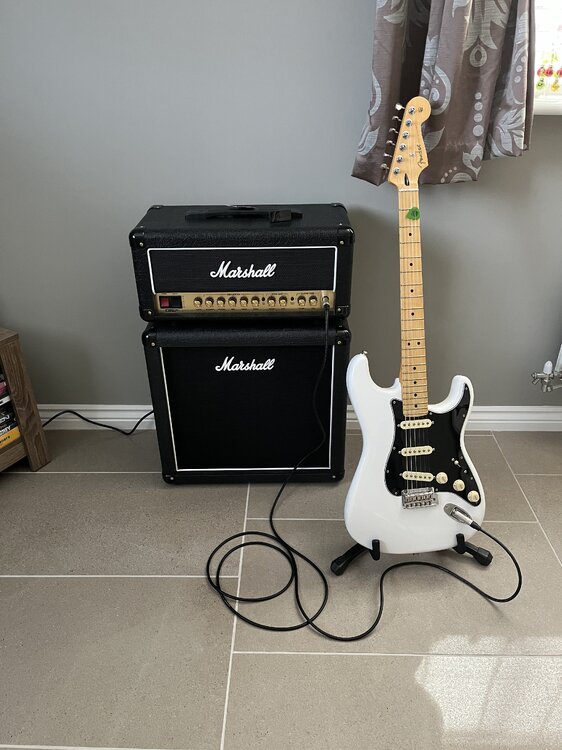 2 points
 -
Hi All, there has recently been an issue with posting which might have meant that you weren't able to create new threads or post. I believe that issue is now sorted and everything should be working fine. If you find you have any issues with posting, please feel free to report it either by selecting support on the menu above and making a new support request, or by messaging me directly. Thanks2 points
-
I totally agree with this; my Takamine is fitted with these ... ... I have 'etching fingers', which rapidly turn steel or nickel-steel strings to red rust; these 80/20 bronze strings suit the guitar perfectly, with the added advantage of being the same gauge as my electrics and semi-acoustics, all fitted with nano-web sets. They last, for me, much longer than any other make of strings; I previously had to change in less than a year, but these were fitted over a year ago now, and are as good as when fitted, although I admit that I don't play my acoustic every day. It's a joy when one finds the right set for any guitar or bass; I'd even extend this to establishing the best heads for an acoustic drum set..! I used Remo Ambassador heads for decades, but the later choice of Evans Genera and G2 heads made a world of difference..!2 points
-
dad ive always been a tight git. i just go on ultimate guitar its free. plus ive just started learning to use fl studio which was given to me for nowt so i can make my own drum beats and backing stuff. dunno if you need to have a face book account to wacth this but here is a very short clip of my doing my best Ian mcCulloch impersonation. i was only going to put the chorus bit in and was virtually mouthing the lead up lines but decided to leave them in. ive watched youtube clips of echo and the bunnymen live and i can safely say i "p1ss" all over what he can do nowadays on the high notes. he needs to go on ultimate guitar and transpose it down a bit lol. https://www.facebook.com/alan.jackson.7731/videos/25322994702932342 points
-
ive done some reading and some cheap machine heads are bad and you cant tune down to get it in tune because they just go out of tune too quick, likely by carrying on turning down by themselves. so you have to go lower and then tune up to get it in tune. thats what the seller told me tune back up. and it helped a tiny bit. but they still just turned by themselves no doubt encouraged by string tension. i mean they arent going to tighten up are they? i looked at the design and the worm is designed to be forced in one direction and hence persuaded not to turn. but it can and does. only a tiny bit but thats all it takes. but not now. its perfect thanks to the tiny washers making the screws actually do their job. thanks for trying to help Dad 3353. guitars arent as difficult to set up as people think. i am a builder and diy mechanic and there is nothing i wouldnt take on myself. ive made nuts from scratch even widened the spacing from std. shortened and packed saddles up. plus ive got a ruddy great big hammer.2 points
-
SRV by Eric Johnson. Took a me ages to get the main parts down and I don’t have the chops to nail the main solo. Still revisit it occasionally, which then becomes also a feat of memory, as alluded to by @Dad3353.2 points
-
It’s been a progression really, so I’ll list them as they came into my consciousness. Les Paul - I was raised with Les in the house, the sound of guitar, front and centre was different from everything else. Hank Marvin - The Shadows were on my turntable a lot with records that I’d inherited, guitar front and centre again. Crosby Stills Nash & Young - The live album, 4 Way Street, made want to learn to play. Eric Clapton - Hearing Layla for the first time was a ‘wow’ moment, I wanted to play like that. I became the biggest fanboy, but can’t stand him now Paul Kossoff & Santana - I didn’t have fast chops and these guys showed that note choice and feel were just as important and I could actually play their lines (at least I thought I could). Eric Johnson - The master of electric tone IMO, I can’t play or sound like him, but still my favourite player. Carl Verheyen - Introduced me to playing bigger intervals for solo breaks, pulled me out of the typical, pentatonic rut. Brian Setzer - I was asked to join a rockabilly band, so started to listen to Brian, completely changed my style. These days, I’m more into rhythm playing and guys like Cory Wong and John Mayer for their rhythm chops are more my thing. As I play mainly acoustic now, I’m also developing a better appreciation for Jimmy Page’s acoustic playing (I think he plays electric like he’s falling downstairs, too messy).2 points
-
Hi all if I tuned down half step… where would a capo go if I wanted to get back to standard tuning? The first fret?2 points
-
In all honesty, I haven’t actually played a jaguar before! But I have numerous guitars both electric and acoustic that have similar or even shorter scale length (which all suit me well since I’m not a very tall person) so I’m confident I’ll enjoy the feel of a jag. One of my 2 main guitars on tour is a Mexican tele and it’s brilliant. It’s got bare knuckle pups and electronics as well as better tuners but build quality and woods are just as good as my vintage and custom shop strats. But I do definitely prefer the classic jaguar with lead and rhythm circuits and individual pickup switches as opposed to the new stripped back player series ones. If I found a Mexican one for sale with standard layout I would really consider it2 points
-
Ooh, you’ve asked the wrong question for me as I’m a Gretsch fanboy. Worst thing I ever did was let my old customised Streamliner. If it were me, I’d get a Electromatic 5420, with a Bigsby (well set up, they’re pretty stable and definitely add something to the sound of the guitar) you don’t have to use it, but it’ll be there if you fancy a wobble.
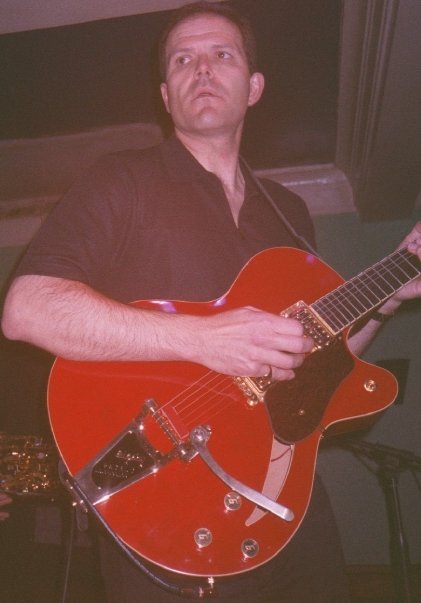 2 points
 -
you might call me Fender Fluid lol2 points
-
Everything that @Dad3353 says above. It happens to everyone, whatever their skill level. Sometime, just taking a week off really helps. For some reason the brain digests everything when you aren't even playing and suddenly you make a jump forward without even realising it.2 points
-
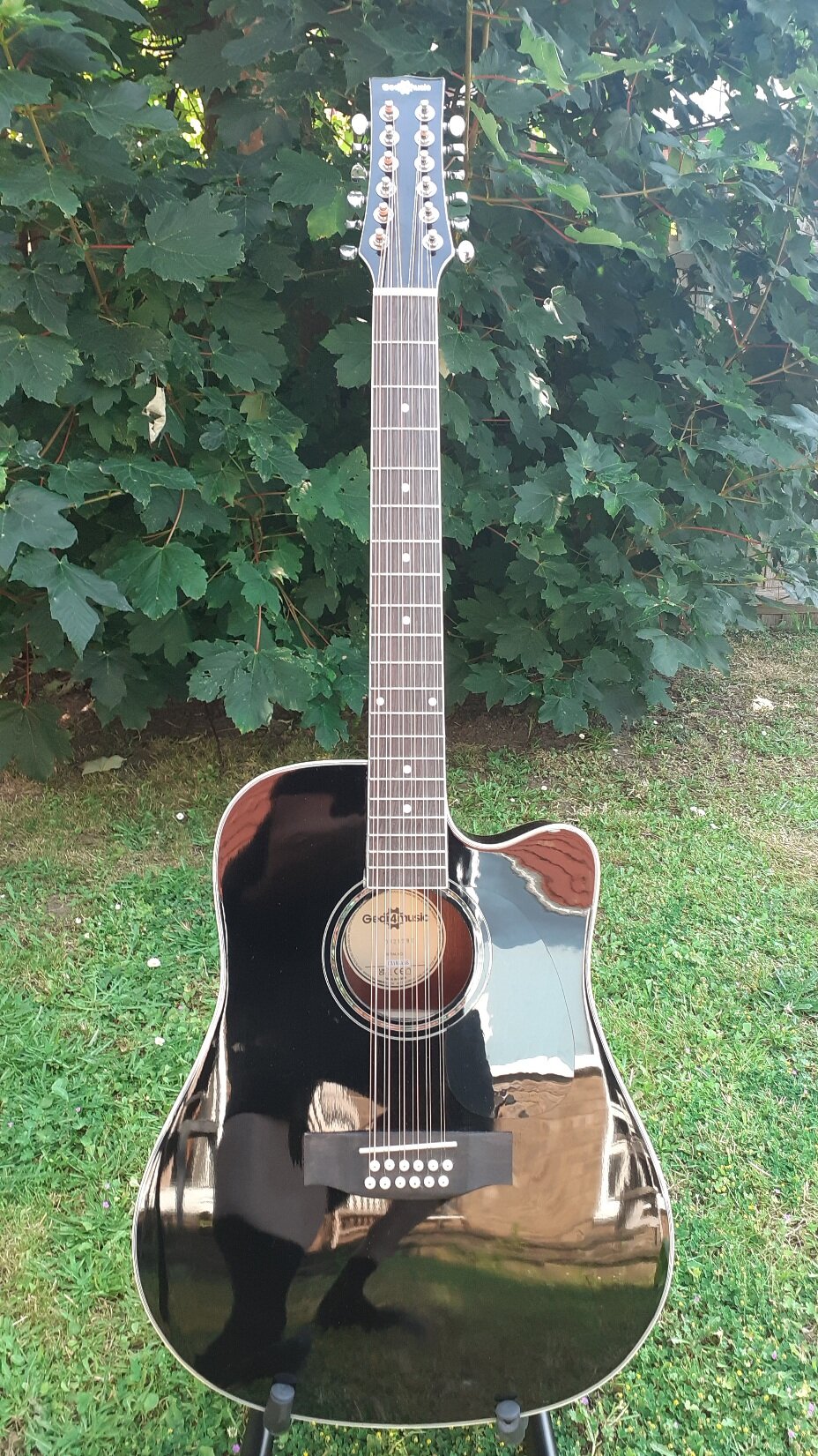
Faceache turned up a G4M 12 for not a lot... cleaned up rather nice
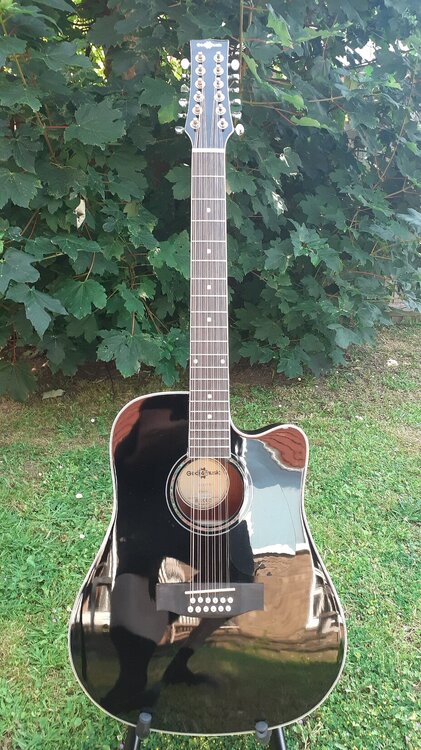 2 points
 -
GAS is a cruel mistress, but she's a lot of fun2 points
-
Thanks for the suggestions. I have experimented with the Ultrabass setting on my Behringer V-amp and it does drop the lower strings without seeming to affect higher notes. It is an octave divider by another name. However the sound coming out of the octave down strings is pretty much a fart, if you’ll pardon the expression. I think I’ll just live with no bottom end.2 points
-
Well, that went to plan. Not. I was all set to get me a nice little Revstar when our local guitar shop advertised a new (well, NOS strictly speaking) Cort CR250 for £299. Other than being a bit dusty and needing some new strings (thrown in as part of the deal), it’s immaculate. Nice weight (well under the weight of a Gibson LP), beautifully made and sounds epic. It’s now mine. I still want a Revstar, mind.2 points
-
This great number was composed by Kevin Romang and is copyrighted by Duo Astral Plane (Kevin Romang and Silvia Plegniere). I played this using my Fender '56 NOS Stratocaster with the neck and middle pickups (Fender 57/62's) both used together, into the excellent Vintage VST Host software produced by Christian Boileau, available absolutely FREE at - https://vintage-sounds.freeforums.net/ https://www.youtube.com/watch?v=pMjwxi8HDlU2 points
-
UPDATE: my Behringer SF300 has arrived. Does the job just nicely! Really useful having the three modes, too: I can see myself using the more "vintage" sound of Fuzz 1 the most, but the scuzzier tone from Fuzz 2 has been quite fun to play with so far. Popping the guitar into drop D with Fuzz 2 certainly gives a nice All Them Witches-type vibe! Thanks again for the recommendation!2 points
-
Proper nut files are extraordinarily expensive, and the cheaper ones not really good at all for that job. If it's just to get rid of the 'jerking' of the string over the nut when tuning, a light sprinkle of graphite powder does a fine job. Some folk get the graphite from quality pencil lead, but it's easy enough to obtain. Amazon propose various versions, as a little flaçon of 50ml for 9€86, or a 1 litre tub for 10€10, and everything in between. Try that first, if unsmooth tuning is the issue..?2 points
-
2 points
-
A few tips that I may adopt for my playing/practice I think! It's good to see others progress and to be able to see that I am not alone and am having the same progress and struggles as others. @ShawnE thanks for sharing your progress it is inspiring and encouraging. Alan2 points
-
Ah, excellent; well done for replying so clearly. It sounds as if you're on the same track as all of us, when starting out. Obviously you should address these concerns with your tutor; he/she will have doubtless heard much the same from many pupils. Meanwhile, if you're not doing it already, I'd recommend playing for short periods, as often as you can, but regularly. Two 15-minutes sessions, each and every day, no exceptions or excuses, will cement the 'information' very quickly. Far better than an hour once a week. I will assume that you have exercises, routines, to practise, from your tutor..? Do these, religiously, in your practise sessions, plus any other stuff you want to do from other sources (method books, U-tube etc...), but avoid playing for too long at a time, especially for the first few months, as this can seal in bad habits and damage your hands. Depending on the complexity, it's normal to have to refer back to the partition (be it tab, notation or chords charts... whatever...) at first, but much will become 'ingrained' over time, as long as you keep plugging away at it assiduously. There is no 'silver bullet', but be assured that every guitarist, whatever their talent, started out with your level of competence. It's only the practising that makes the difference, and it's not overnight. Speak to your tutor, then, follow their advice and method, and trust me; it will all come together, and all the faster for being patient and doing things slowly. I'll end with my usual tongue-in-cheek encouragement ... It's the first forty years that are the hardest, after which things sometimes tend to get very slightly easier.2 points
-
i used one continuous oak board (easy cuts) to make this: lots of sanding, some stain, etc. I used the scraps to create supports for the bottom side (given the stomping): i used a 1 3/8" hole saw to cut an opening for wires. i then took that plug and split it in half to make posts, to wrap the excess wire: on the underside, i used wire ties, tacked into the wood, to secure the power lines: in the far corner above, you can see i velcroed the transformer onto the underside. then, velcro on the top, and on the pedals, and a $6 leather handle: then, rubber feet on the bottom, and wire it all together. PS this is not representative of my pedal setup, this is just for testing! i'll post the actual rig soon. it's made it through 6 gigs. hopefully more to come (we have about a dozen lined up!). what i'd change- it doesnt stand on it's side, probably because of how heavy pedals are. to put a stand plate on one side would mess with the aesthetic. what i'm thinking of adding- maybe a shoulder strap so i can make one trip from the car to the studio. i can send plans if anyone wants.2 points


.jpeg.17ccfbb693c2d1b5045613133242ec09.jpeg)






.thumb.png.5ee2f5dc8ab253d965d437b6a37cbc2e.png)


.thumb.jpg.34affd8f5098b09fd5e630707cf875e9.jpg)